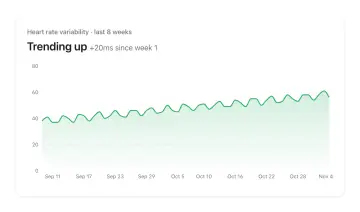
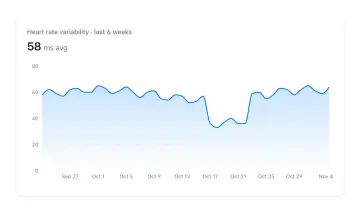
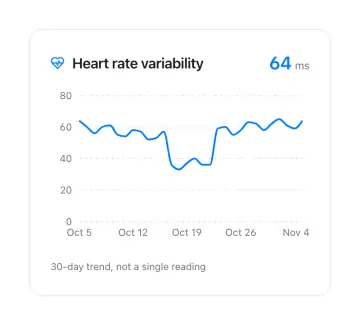
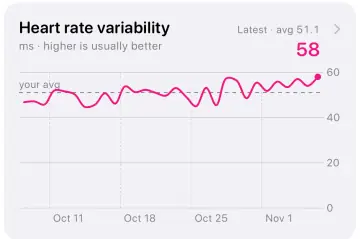
Find your Apple Watch heart rate variability in Apple Health, understand your personal baseline, and troubleshoot missing HRV readings without overreacting to one number.
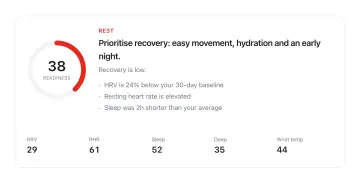
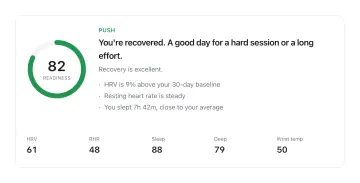
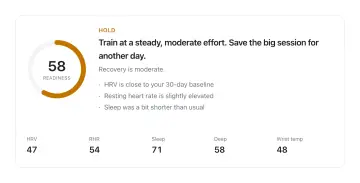
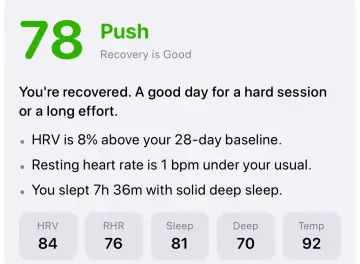
Apple's Readiness score (0-10) turns activity, sleep, and overnight vitals into one of four daily recommendations. Here's what the score measures, which watches support it, and how it compares to VedaWatch's own recovery view.
No Readiness app, a blank score, or a number that hasn't updated in days. Walk through the hardware, setup, and sleep-tracking requirements that explain most missing Readiness scores on Apple Watch.
Apple Watch now has its own Readiness score, and Whoop has built its business on Recovery. Compare how each one works, what each costs, and whether wearing two devices actually gets you anything.
Oura tracks HRV continuously overnight from a ring and rolls it into a 0-100 Readiness Score with nine contributors. Apple Watch samples HRV periodically and now has its own Readiness feature on newer models. Here's how the two actually differ.
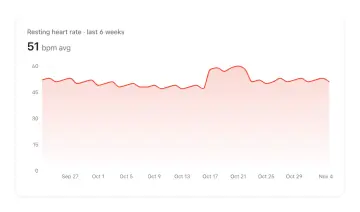
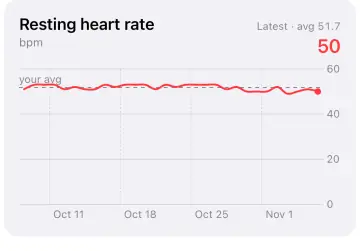
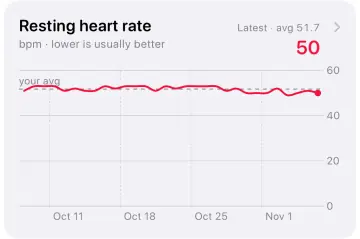
Apple Watch works out your resting heart rate from readings taken while you're still throughout the day, not a single morning check. Here's how to read it, what's normal, and what actually moves the number day to day.
HRV responds to weeks of habits, not a single good night. Here's what has real support behind it—sleep consistency, alcohol, aerobic exercise, and stress management—and why fixating on tomorrow's number usually backfires.
Apple published its own validation numbers for sleep stage tracking: how often it correctly spots sleep, how often it correctly spots being awake, and where it tends to make mistakes. Here's what the data actually says, plus fixes for the most common tracking problems.
A lower-than-usual HRV reading isn't a verdict on your workout. Here's what the actual research on HRV-guided training shows, and how to weigh one number against sleep, soreness, and how you feel before deciding to train or rest.
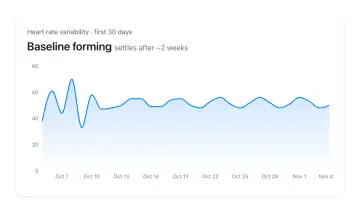
There's no good HRV number in the abstract—only a good number for you, built from your own history. Here's how much data that actually takes, what research says about reliable windows, and what can reset a baseline you've already built.
A 2024 peer-reviewed study measured Apple Watch HRV against a chest-strap ECG reference across 316 paired readings. Here's what it found, why the watch still underestimates HRV, and what that means for using your trend instead of the raw number.
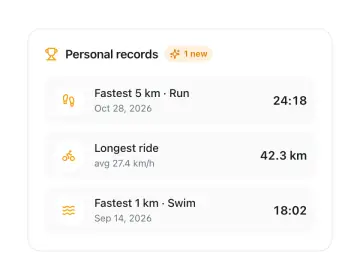
Runners have found their Apple Watch 'fastest 10K' award badge showing a time that doesn't match the workout it supposedly came from. Here's how Awards are actually calculated, why they can diverge from your workout summary, and a more transparent way to track personal records.
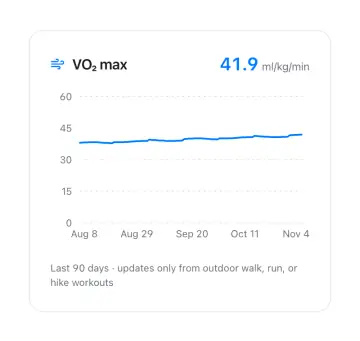
Apple Watch estimates your VO2 max—a strong predictor of long-term health—from outdoor walk, run, and hike workouts. Here's exactly how it's calculated, what counts as a good score, and what a 2024 lab validation study found about its accuracy.
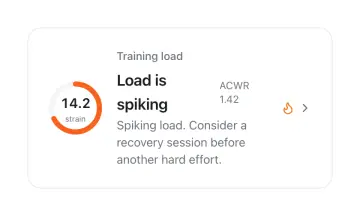
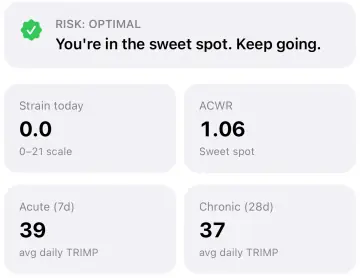
Apple Watch's Training Load feature compares your last 7 days of workouts to the previous 28—the same acute:chronic workload ratio sports scientists have debated for a decade. Here's where the idea comes from, what the research actually supports, and how VedaWatch computes its own version.
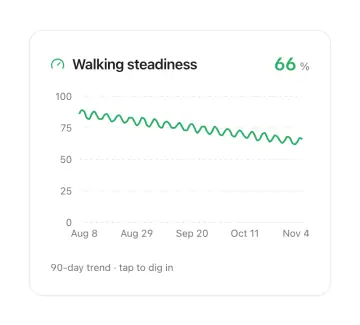
Walking Steadiness is an iPhone feature, not an Apple Watch one—it uses your iPhone's motion sensors to assess gait and flag a higher risk of falling. Here's exactly how it works, what the research says about the gait measurements behind it, and what's still not fully public about the score itself.
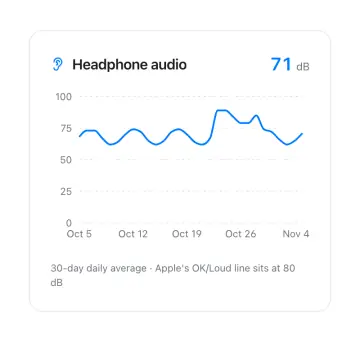
Apple tracks two separate things under 'Hearing': how loud your headphones have been, and how loud your surroundings are. Both use the same OK/Loud line at 80 decibels—but 'risky' is really about dose, not one number. Here's Apple's own exposure-time table, and what its own hearing-health study found.
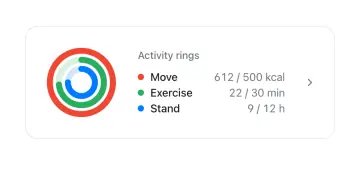
Move, Exercise, and Stand aren't arbitrary—each ring tracks something specific, and there's real public-health research behind the "sit less, move more" idea they're built on. Here's exactly what each ring measures, the most common reasons they won't close, and the evidence for why the Stand ring exists at all.
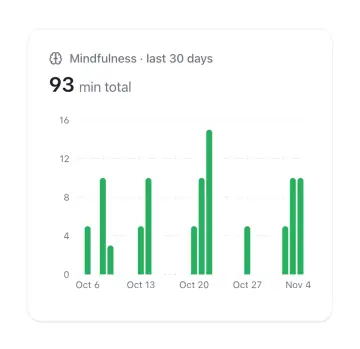
Apple Watch's Mindfulness app logs Reflect and Breathe sessions as mindful minutes in Apple Health. Here's exactly how that tracking works, plus an honest look at a major meta-analysis of 47 clinical trials on what meditation does and doesn't reliably help with.
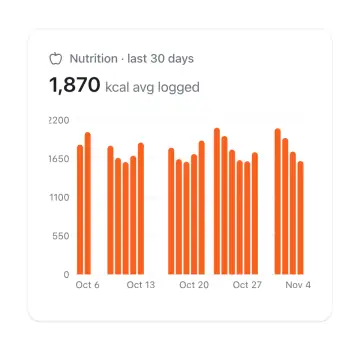
Your Apple Watch doesn't log food—nutrition data in Apple Health comes from manual entry or a connected app. Here's how that actually works, plus a landmark research finding on just how far off self-logged calories tend to run compared to what people actually eat.
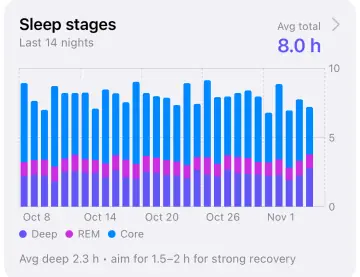
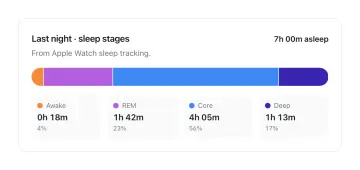
Apple Watch sorts each night into Awake, REM, Core, and Deep sleep. Here's how those four labels map onto the sleep stages researchers use, how much of each is typical, and what actually shifts your stage breakdown night to night.
Apple Watch measures your wrist temperature overnight and shows how far each night is from your own baseline. Here's which watches support it, how to set it up, where to find it, and how to read a change without overreacting.
Zone 2 is easy, conversational aerobic exercise. Here's how to work out your Zone 2 heart rate, see it live in the Apple Watch Workout app, set manual zones when the automatic ones are off, and how much of it is worth doing.
Regular endurance exercise is the most reliable way to bring resting heart rate down over time, and sleep, alcohol, and stress explain most short-term swings. Here's what the research shows, how long changes take, and how to track progress on Apple Watch.
Both steady cardio and high-intensity intervals raise VO2 max, and intervals tend to raise it a bit more. Here's what the research supports, a simple weekly structure, how fast to expect change, and how to make sure Apple Watch's Cardio Fitness estimate keeps up.
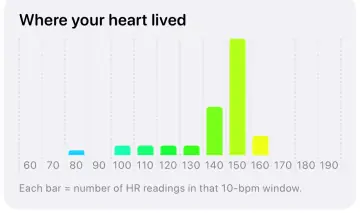
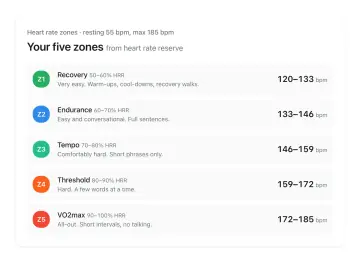
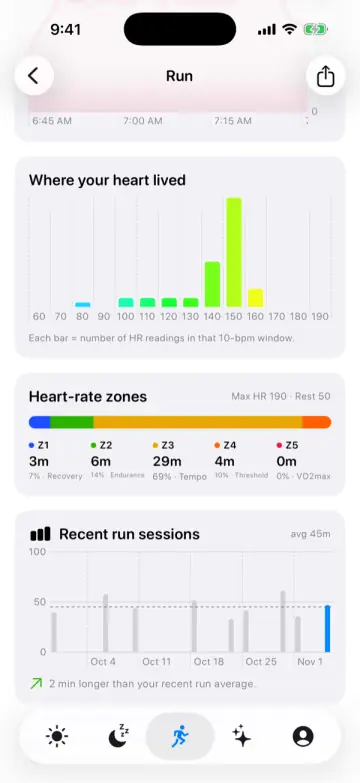
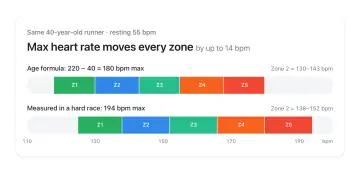
What the five Apple Watch heart rate zones mean, how they're calculated, why your zones can be off by 10 bpm or more, and how to set manual zones and use them to balance easy and hard training.
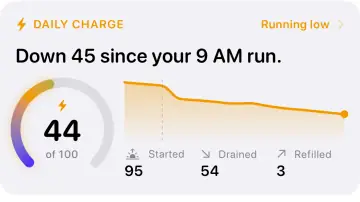
Daily Charge is a 0–100 energy gauge for Apple Watch. It starts from last night's sleep and HRV, drains with time awake, workouts and stress, and refills a little when you rest.
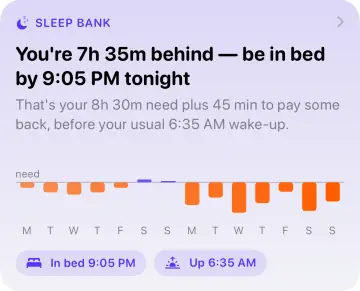
See how many hours of sleep you're behind over the last two weeks, how your sleep need is set, and what time to be in bed tonight to start paying the debt back, using Apple Watch sleep data.
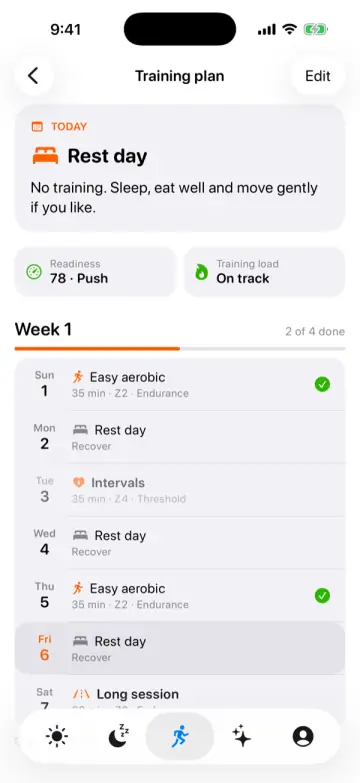
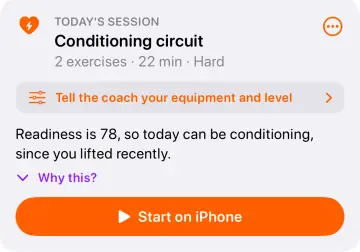
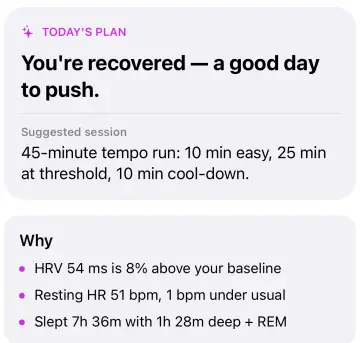
How VedaWatch's daily coach turns readiness, recent training, soreness and your level and equipment into one guided session, explains why, and steps up as you get stronger.
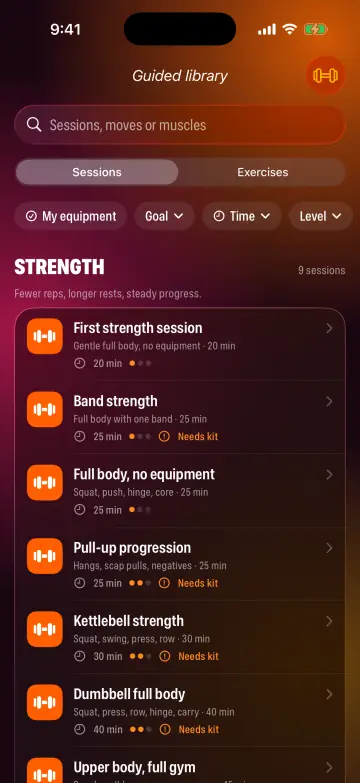
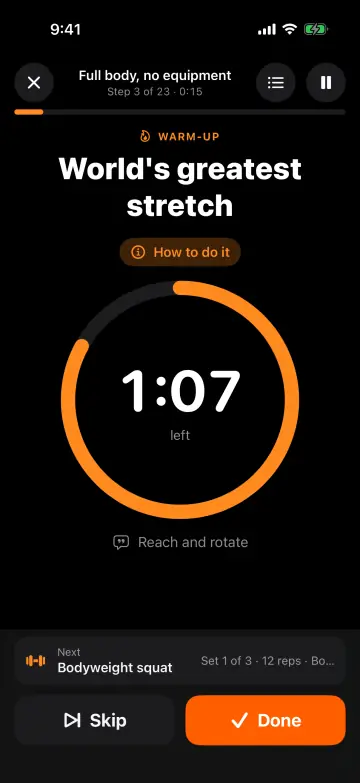
How VedaWatch's guided training works: pick a session or exercise from the library, start it on Apple Watch or iPhone, follow timers and spoken cues, and let your watch count reps.
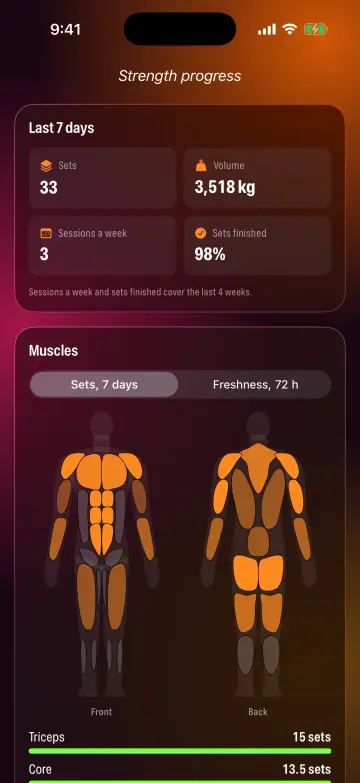
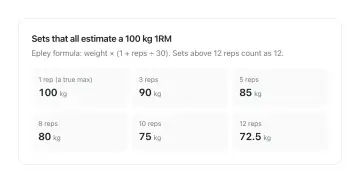
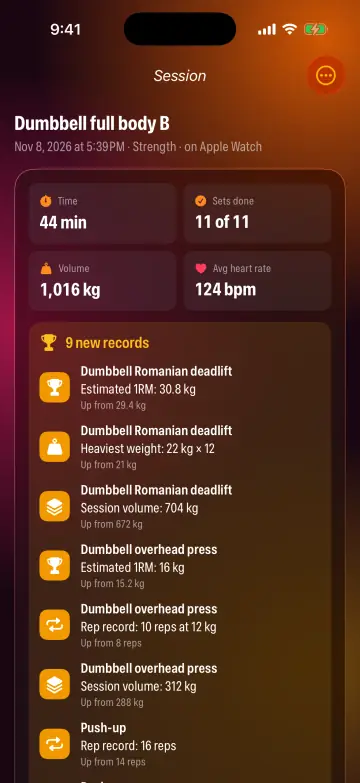
Track strength progress from guided Apple Watch sessions: weekly sets per muscle, estimated 1RM with the Epley formula, personal records, muscle freshness and a quick post-session check-in.
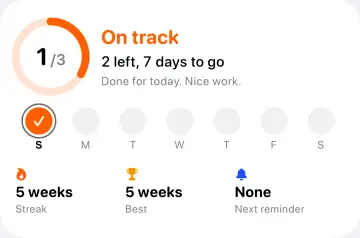
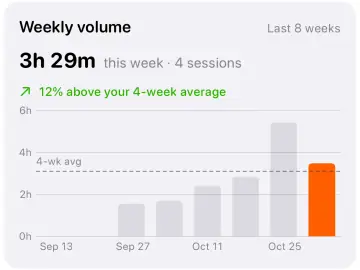
Set a weekly training target in VedaWatch: pick how many days a week you'll train, what counts, optional training days and reminders, and build a streak of weeks kept.
How VedaWatch builds a race plan for your first 5K, a faster 5K, a 10K or a half marathon: base, build, peak and taper phases, realistic paces, and sessions that adjust to readiness.
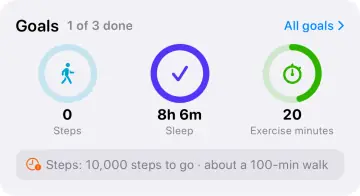
Set daily or weekly step, sleep, exercise, energy and distance goals in VedaWatch, see live progress from Apple Health, and get a concrete nudge when you fall behind pace.
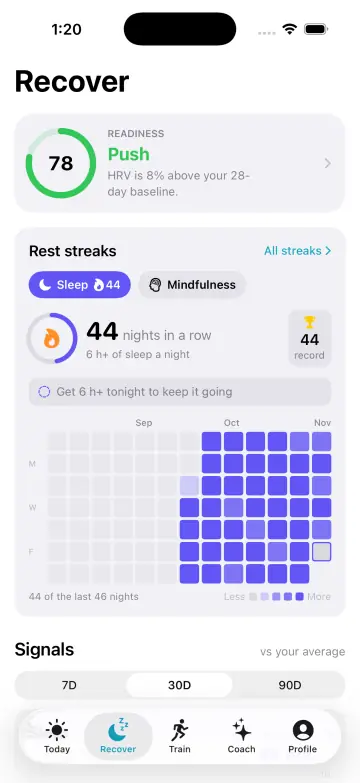
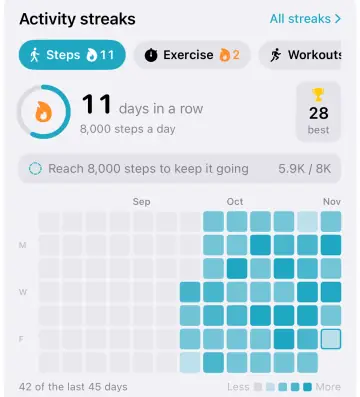
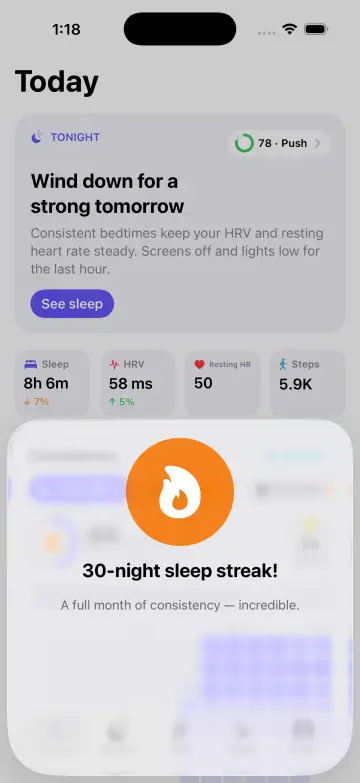
Apple Watch streak awards centre on your rings. Here's how VedaWatch builds sleep, workout, exercise, step and mindfulness streaks from Apple Health, and how it handles missed days.
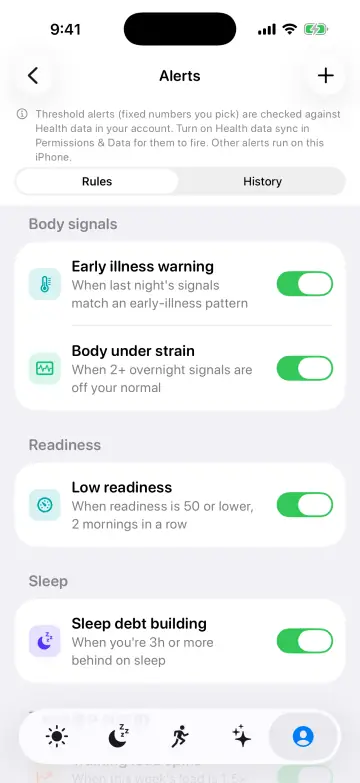
How VedaWatch's smart alerts work: early illness warning, body under strain, resting HR and wrist temperature above your normal, low readiness, sleep debt and training load spikes.
Alcohol, late coffee, stress or screens in bed: tag your days in VedaWatch and see how each one goes with your next-morning Apple Watch HRV, compared with your ordinary days.
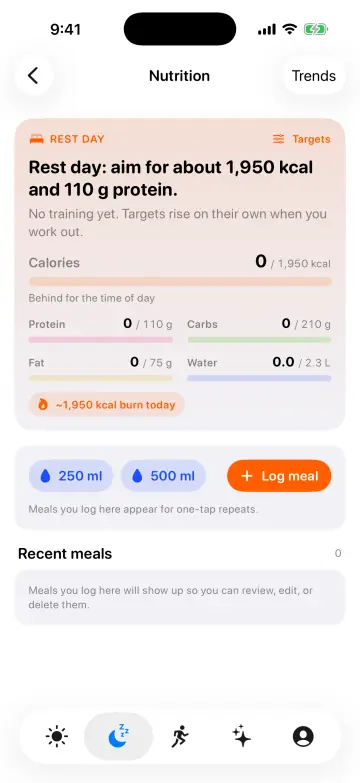
How VedaWatch turns your Apple Watch burn, body weight and training plan into daily calorie, protein, carb, fat and water targets that rise on training days, and how to log meals fast.
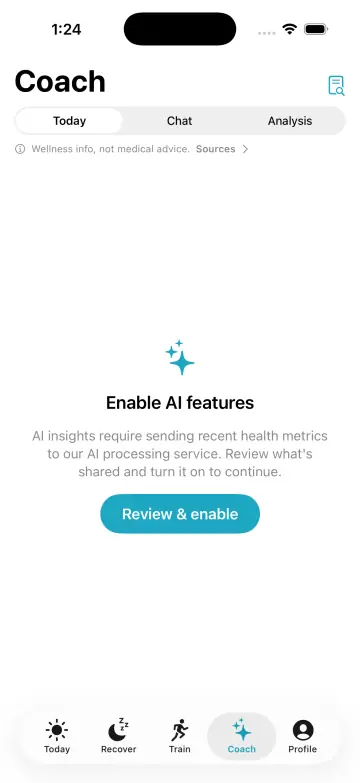
How VedaWatch's AI Coach turns your Apple Watch data into a daily plan, chat answers, 30-day analyses and weekly reports, exactly what data it sends, and how to turn it on or off.
Let Claude, ChatGPT or Gemini answer questions about your readiness, sleep and workouts. Add VedaWatch as a read-only connector, approve access, and remove it any time.
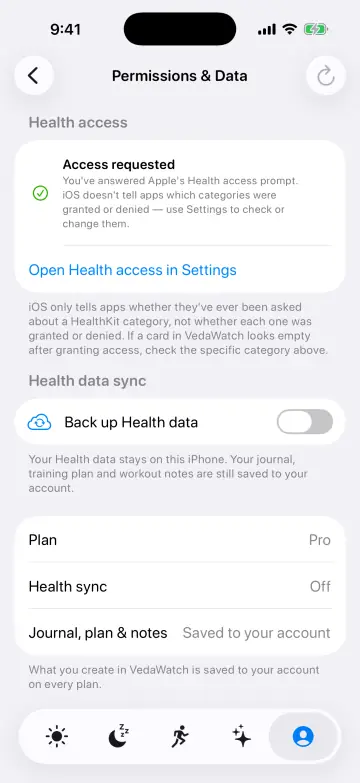
What VedaWatch keeps on your iPhone and what it saves to your account, how the opt-in Health backup works, and how to check Health access, export your data or delete your account.
Does alcohol lower HRV? What studies show on dose and timing, how long the dip lasts, how it shows in Apple Watch HRV and resting HR, and how to test it.
Does caffeine affect HRV? What studies on coffee and heart rate variability really show, why timing before sleep matters most, and how to test your own cutoff.
Why HRV drops after a hard workout, how long it takes to recover by session type according to research, and how to use next-morning HRV to plan your next session.
HRV when sick: how HRV, resting heart rate, wrist temperature and breathing rate shift before symptoms, how often wearables are wrong, and when to train again.
Apple Watch vs Garmin Body Battery, Training Readiness and HRV Status: what each Garmin metric does, what Apple Watch offers natively, and what an app adds.
The best recovery app for Apple Watch depends on your watch, budget and privacy needs. Compare Readiness, Athlytic, Bevel, Gentler Streak and more, with prices.
Looking for an Athlytic alternative? Compare recovery, exertion, sleep, coaching and pricing across Apple's Readiness, Bevel, Gentler Streak and VedaWatch.
Looking for a Bevel app alternative? See what Bevel includes free and in Pro, the 8 things to compare, and how Athlytic and VedaWatch differ on Apple Watch.
The best AI fitness coach apps for iPhone compared: what data each one reads, whether answers use your Apple Watch numbers, privacy, and the pitfalls to avoid.
Looking for an Apple Fitness+ alternative? What Fitness+ does well, what it doesn't do yet (recovery-based training, lift tracking) and which apps fill each gap.
Are Apple Watch calories accurate? What validation studies found for cardio and strength training, active vs resting vs total, and how to use them for eating.
Apple Watch AFib History: who it's for, how the weekly AFib estimate works, how it differs from irregular rhythm alerts, its limits, and when to see a doctor.
Apple Watch battery and sleep tracking: a charging routine for wearing it overnight, charge times by model, power-saving settings and what Low Power Mode costs.
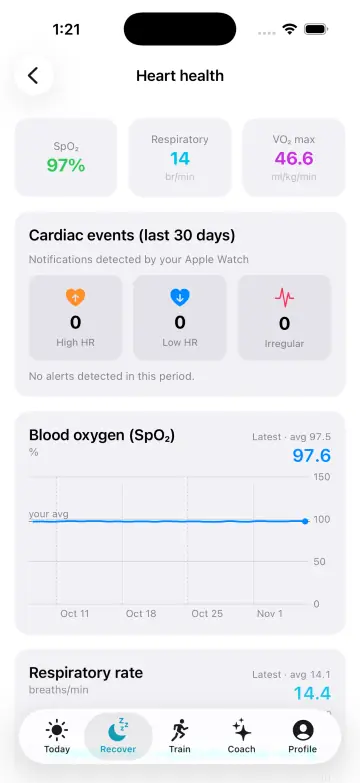
Apple Watch blood oxygen explained: normal SpO2 awake and while sleeping, how the watch measures it, what accuracy studies found, and US availability in 2026.
What triggers an Apple Watch high heart rate notification, how to set the threshold, common harmless causes, and the symptoms that mean you should get care now.
What an Apple Watch hypertension notification means, which watches and regions support it, how accurate it was in the FDA study, and the 7-day cuff check to do next.
How Apple Watch sleep apnea notifications and the Breathing Disturbances metric work, how accurate they are, what they can't tell you, and what to do next.
What the Apple Watch Vitals app shows, how its typical range and outliers work, why one outlier rarely matters, and what to do when several vitals are off.
Fitbit Daily Readiness vs Apple Watch: what Fitbit's score uses, if it needs Premium, what Apple Watch has built in, and how to get a similar score on any model.
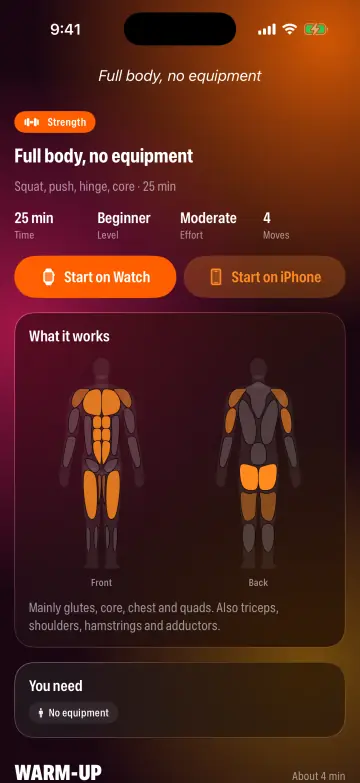
A beginner full body workout plan for 3 days a week: two workouts with sets, reps and rest, a 6-minute warm-up and an 8-week progression based on ACSM guidance.
The best Apple Watch apps for fitness in 2026, sorted by need: running, strength, recovery, sleep, nutrition and habits, with prices checked on the App Store.
The best HRV app for Apple Watch depends on how it handles your baseline, SDNN vs RMSSD, morning vs overnight readings, trends and tags. Six options compared.
The best running training plan apps for Apple Watch, compared as of November 2026: how plans adapt, whether they use recovery, what runs on the wrist, and cost.
The best sleep tracking app for Apple Watch depends on your needs. Apple Sleep, AutoSleep, Pillow, SleepWatch and more compared on stages, debt and alarms.
The best strength training app for Apple Watch depends on how you lift. Compare logging, rep counting, rest timers, progression and 1RM tracking in 6 apps.
The best Whoop alternatives for Apple Watch owners: Apple's free tools and four apps for recovery, strain and sleep, compared on price, features and setup.
A 12-week bodyweight workout plan with no equipment: two full-body workouts, exercise ladders from wall push-ups to pistols, and rules for when to level up.
Breathing exercises to increase HRV: what resonance breathing research shows, a step-by-step 6-breaths-a-minute routine, and how to use Apple Watch Breathe.
Can AI read Apple Health data? Only if you let it. See the 3 ways AI tools get your Health data, what each shares, what to ask first and how to revoke access.
Can you catch up on sleep? What studies show about weekend lie-ins, how long it takes to pay back sleep debt, what recovery sleep can't undo, and a realistic plan.
A complete couch to 5K plan for Apple Watch: all 9 weeks of run/walk intervals, how to set them up in the Workout app, and what to change on low-recovery days.
How much creatine should you take? The ISSN's 3-5 g a day vs a loading phase, doses by body weight, real benefits, myths, and who should ask a doctor first.
What a deload week is, how often lifters take one, whether to cut volume or intensity, the signs you need one (HRV and readiness included) and a sample week.
Easy run pace with worked examples: the talk test, heart rate range, pace from your 5K time and effort scale, and how to keep easy runs easy on Apple Watch.
Looking for a Gentler Streak alternative? Compare apps for readiness scores, guided strength, race plans and AI coaching, and keep the rest-friendly mindset.
A half marathon taper that cuts volume but keeps intensity: a day-by-day plan for race week, plus sleep, carbs, and what HRV and readiness do while you taper.
What heart rate recovery after exercise means, normal values from research, how Apple Watch Cardio Recovery works, how to improve it and when to see a doctor.
HIIT vs steady state cardio: what research says on VO2 max and fat loss, how long each takes to recover from, and how to mix both weekly by heart rate zone.
A home dumbbell workout plan for one pair of dumbbells: two full-body workouts, 3 days a week, how to choose your weight and how to progress when it gets light.
How alcohol affects sleep: what drinks before bed do to falling asleep, REM, the second half of the night and heart rate, and how it shows on Apple Watch.
How long to rest between sets for strength, muscle growth and endurance, what the research says, how supersets save time, and how to time rests on Apple Watch.
How many sets per muscle per week build muscle and strength: what dose-response meta-analyses found, ranges for beginners and lifters, and how to count sets.
How many steps a day you need, by age, from large cohort studies: where 10,000 came from, whether walking pace matters, and how to set a step goal you'll keep.
How much deep sleep do you need? Typical percentages and minutes by age from sleep-lab studies, how Apple Watch estimates it, and what helps or hurts it.
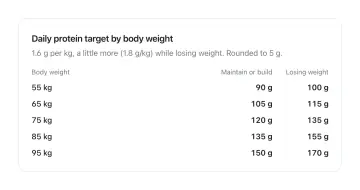
How much protein per day to build muscle, by body weight: what meta-analyses show (1.6 to 2.2 g/kg), grams per meal, older adults and when to check with a doctor.
How much REM sleep do you need? Typical REM share by age, why short nights cut REM most, what suppresses it, and how accurately Apple Watch measures REM.
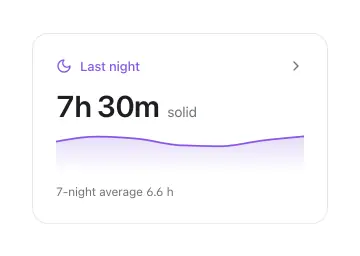
How much sleep you need by age, per the AASM and National Sleep Foundation, why athletes often need more, and how to find your own number from your sleep data.
How much water to drink before, during and after a workout: ACSM guidance, a worked sweat-rate test, when electrolytes matter, and how to avoid overdrinking.
How to calculate one rep max from any set: the Epley, Brzycki and Lombardi formulas with worked examples, how accurate they are, and how to train by %1RM.
How to export Apple Health data step by step: what's inside export.xml, how to turn it into CSV, how to share it with a doctor, and how to keep the file private.
How to fall asleep faster using CBT-I methods: stimulus control, a wind-down hour, light and caffeine timing, normal sleep latency, and Sleep Focus on iPhone.
How to get more HRV readings on Apple Watch: when it measures, settings and fit that stop it, how to take a manual Breathe reading, and when gaps are normal.
How to run a faster 5K in 8 weeks: one interval day, one tempo, easy runs and a long run, realistic time goals, race-day pacing and Apple Watch pace alerts.
Does stress lower HRV? What research on mental stress shows, what Apple Watch can and can't measure about stress, and practical ways to use your HRV data.
HRV and the menstrual cycle: how HRV, resting heart rate and wrist temperature shift by phase, how to read readiness in the luteal phase, and what's normal.
How to increase running mileage safely: what the research says about the 10 percent rule, single-run spikes, ACWR and cutback weeks, plus a worked 8-week build.
Is Apple Watch worth it for fitness? What validation studies say it tracks well and poorly, who benefits most, what apps add, and the honest downsides.
Jet lag recovery for athletes: when to seek or avoid light, how to shift sleep before you fly, what melatonin evidence shows, and how to train after landing.
80/20 running explained: what Seiler's polarized training research found, how to split your week, sample weeks for 3 to 5 runs, and how to check it on Apple Watch.
A push pull legs split for beginners: 3-day and 6-day weeks written out, sample workouts, PPL vs full body, weekly sets per muscle and how to progress.
Normal respiratory rate during sleep for adults, how Apple Watch measures breathing overnight, how accurate it is, and why a rise can be an early sign of illness.
Rest day vs active recovery: what the research says, a simple readiness and HRV decision guide, Zone 1 session ideas, and how many rest days a week to take.
Do saunas and cold plunges raise HRV? What studies show during, after and weeks later, how to time them around strength training, and who should be careful.
The signs of overtraining, from overreaching to overtraining syndrome, which ones Apple Watch can pick up (HRV, resting HR, load spikes) and what to do next.
Does sleep help muscle recovery? What studies show about sleep loss, strength, muscle growth and injury, how much athletes need, and a plan around hard training.
Sleep consistency explained: what the Sleep Regularity Index research found, how much bedtime variation is too much, social jet lag, and steps to steady it.
How to start running again after a break of 2 weeks to 6 months: a return plan by break length, a run/walk ladder, safe build-up rules, and using HR and HRV.
A 6-week walking workout plan with brisk pace and cadence targets, weekly step and Exercise ring goals, and what research says walking for fitness does.
Weekly vs daily fitness goals compared: what the WHO 150-300 minute guideline and goal research say, why weekly targets survive missed days, and how to set yours.
What is a good HRV? Published norms by age and sex, SDNN vs RMSSD, how to read your Apple Watch number, and why your own baseline and trend matter more.
What is MCP? A plain-English guide to the Model Context Protocol, connectors in Claude and ChatGPT, OAuth sign-in, read-only access and risks for health data.
Work out what time to go to bed from your wake-up time and sleep need: a bedtime table, worked examples, the truth about 90-minute cycles, and chronotype tips.
What to eat after a workout, by session type: how much protein and carbs, whether the anabolic window is real, worked examples by body weight, and how to rehydrate.
What to eat before a morning run, from fasted easy jogs to long runs: carb amounts by body weight, quick foods by timing, hydration, coffee and gut comfort.
Which Apple Watch is best for health tracking in November 2026: Series 12, Ultra 4 and SE 3 sensors compared, what older models lack, which watchOS you need.
Whoop vs Oura as of November 2026: band vs ring, Recovery vs Readiness, sleep, strain, battery and membership costs, plus where an Apple Watch fits in.
Sore 1-3 days after a workout? Learn when it's fine to train, how to adjust the session, what actually eases soreness, and which signs mean you should stop.
Apple Watch heart rate jumping, stuck or missing during workouts? Why the optical sensor misreads, and 9 fixes for fit, settings, cold, tattoos and chest straps.
How to measure blood pressure at home the right way: cuff size, posture, the best time of day, how many readings to take, what the numbers mean and when to see a doctor.
The best exercise to lower blood pressure, from a 270-trial analysis: wall sits, walking, strength and HIIT compared, a sample week, and when to get medical advice.
How to take an ECG on Apple Watch step by step: supported models, what sinus rhythm, AFib and inconclusive results mean, how to get a clean reading and share the PDF.
Does Apple Watch track stress? There's no native stress score, but HRV, resting heart rate and State of Mind help. How to check stress on Apple Watch, and limits.
Box breathing vs 4-7-8 breathing: step-by-step for each, what studies show, and when to use box, 4-7-8, resonance breathing or a cyclic sigh for stress and sleep.
What's the best time of day to work out? What studies show on morning vs evening workouts for strength, weight loss and sleep, and how to test timing yourself.
What an Apple Watch low heart rate notification means, how to change the threshold, why 40 bpm asleep can be normal, and the symptoms that mean see a doctor.
How to calculate max heart rate: 220 minus age vs the Tanaka and Gellish formulas, how far off they can be, a safer field test, and using Apple Watch workout data.
Why do I wake up at 3am? How normal sleep cycles, alcohol, stress, caffeine and sleep apnoea cause night waking, what to do, and how it shows on Apple Watch.
Apple Watch running power explained: what the watts mean, which models show it, how to add the Power view, and when to pace by power, pace or heart rate.
How to use Apple Watch for weight loss: what the calorie numbers mean, setting a Move goal, steps, strength training, protein, sleep and a realistic weekly pace.
 VedaWatch