 VedaWatch
Comparisons
Athlytic alternative: how other Apple Watch recovery apps compare
Looking for an Athlytic alternative? Compare recovery, exertion, sleep, coaching and pricing across Apple's Readiness, Bevel, Gentler Streak and VedaWatch.
By VedaWatch editorial team · · 11 min read
The short answer
Athlytic is a strong, low-cost recovery app, so switch only for something specific. If you have a Series 12 or Ultra 4, Apple's free Readiness app may be enough. Bevel adds nutrition and strength logging, Gentler Streak takes a gentler activity approach, and VedaWatch adds a free readiness score, Sleep Bank, guided workouts and an optional AI coach.
What is the best Athlytic alternative?
There isn't one best replacement, because people leave Athlytic for different reasons. Some want something free, some want more than recovery (nutrition, strength training, a structured plan), and some want a coach they can talk to. The right alternative depends on which of those you're missing.
All of the apps compared here work the same basic way: your Apple Watch writes heart rate variability (HRV), resting heart rate, sleep and workouts to Apple Health, and the app turns those numbers into a daily answer about how hard to go. None of them needs extra hardware. What differs is the scoring, what else the app covers, and how you pay.
Quick version, as of November 2026: Apple's own Readiness app is the free option if you own an Apple Watch Series 12 or Ultra 4. Bevel is the broadest all-in-one, with nutrition logging and a strength trainer. Gentler Streak suits people who want encouragement rather than strain targets. VedaWatch gives you a readiness score, sleep debt and guided workouts free, with an AI coach and adaptive training plans in its paid tier.
What Athlytic does well
Athlytic, made by MyndArc, has been one of the best-known Whoop-style apps for Apple Watch for years, and its App Store listing shows a 4.8 rating from about 11,000 ratings as of November 2026.
Recovery is a 0-100% score each morning, built from your overnight HRV and resting heart rate compared with your personal baseline. On Series 12 and Ultra 4 it can use Apple's newer overnight HRV. Exertion is a 0-10 score for cardiovascular load that builds through the whole day, not only during workouts, and Target Exertion gives you a range to aim for based on that morning's Recovery. That live, all-day target is Athlytic's signature feature, and it's the thing most alternatives handle differently.
Around that core, the listing describes Target Sleep with a target bedtime, detailed sleep metrics (debt, consistency, efficiency, heart rate dip), a Battery energy view, a stress view, a journal that shows how habits like caffeine or alcohol relate to Recovery and Sleep, Athlytic Age, workout suggestions you can send to the Watch, 24 iPhone widgets and 16 Watch complications. Ask Athlytic answers plain-language questions about your data using Apple Intelligence.
Price is a big part of its appeal. Athlytic says it has one plan: $4.99 a month or $29.99 a year, with a 7-day free trial and no lifetime unlock, as of November 2026. Its App Store privacy label reads Data Not Collected, and the site says data is processed on your device.
Why people look for an Athlytic alternative
Because Athlytic is affordable and well rated, people usually switch for a specific gap rather than general dissatisfaction. The most common reasons are these:
- They want something free. Athlytic's full app is behind its subscription after the trial. Apple's Readiness app is free on supported watches, and some alternatives keep a daily recovery score in a free tier.
- They want more than recovery. Athlytic focuses on recovery, exertion and sleep. If you also want food logging, a strength-training library, or a race plan that adapts week by week, you need a broader app.
- They want a conversation, not just a number. Some people want to ask follow-up questions like "why is my HRV down three days running?" and get an answer tied to their own data and plan.
- They find strain targets stressful. A daily exertion target suits some people and makes others feel they're always behind. Apps that frame activity more gently can be a better fit.
- Their scores don't feel right. Recovery apps disagree with each other because they weigh HRV, resting heart rate and sleep differently. If a score rarely matches how you feel, a different method may suit you better.
Athlytic vs alternatives: recovery, exertion, sleep, coaching and price
Here is how the main Apple Watch options line up on the five things people compare most. Details come from each app's App Store listing, official site or support page as of November 2026. Prices are US App Store prices and can differ by country.
On price, the pattern is clear: Athlytic is the cheapest paid app here, Apple's Readiness costs nothing beyond the watch, and the others are free to download with optional paid tiers that cost more than Athlytic.
- Recovery. Athlytic: 0-100% from overnight HRV and resting heart rate. Apple Readiness: 0-10 in four bands, using activity, overnight vitals and sleep. Bevel: Recovery score plus an Energy Bank. Gentler Streak: daily readiness from vitals and sleep. VedaWatch: 0-100 readiness from HRV, resting heart rate, sleep and deep sleep with a Push, Hold or Rest verdict.
- Exertion. Athlytic: all-day 0-10 Exertion with a daily Target Exertion range. Apple: training load and workout effort feed Readiness. Bevel: a Strain score. Gentler Streak: Activity Path and live training effects, with an overreaching countdown. VedaWatch: daily strain (0-21) and a 7-day vs 28-day training load ratio, both built from your workouts.
- Sleep. Athlytic: Target Sleep, bedtime and detailed sleep metrics. Apple: a sleep score feeds Readiness. Bevel: a sleep score with a smart alarm. Gentler Streak: 14-night trends in duration, consistency and stages. VedaWatch: sleep stages plus Sleep Bank, which tracks 14 nights of debt and suggests tonight's bedtime.
- Coaching. Athlytic: workout suggestions and Ask Athlytic via Apple Intelligence. Apple: four plain recommendations, Recover to Go For It. Bevel: Bevel Intelligence AI, with paid credits sold separately in the app. Gentler Streak: workout suggestions that follow your readiness. VedaWatch: a free daily guided session sized to readiness; AI chat, a daily coach plan and adaptive training plans in Pro.
- Price model. Athlytic: one plan, $4.99 a month or $29.99 a year. Apple Readiness: free, Series 12 and Ultra 4 only. Bevel: free download, Bevel Pro $14.99 a month or $99.99 a year. Gentler Streak: free download, Gentler Premium with monthly, yearly and lifetime options. VedaWatch: free core app, Pro $6.99 a month or $59.99 a year.
Do you still need Athlytic if your Apple Watch has Readiness?
Apple added a Readiness app in 2026, and for some people it removes the need for a third-party recovery app. It scores you from 0 to 10 and puts you in one of four bands: Recover (0-1), Pace Yourself (2-4), Ready (5-7) or Go For It (8-10). It uses recent activity (active calories, workout effort and training load), overnight vitals (heart rate, respiratory rate, wrist temperature, HRV and blood oxygen) plus daytime heart rate, and your recent sleep score.
The catch is hardware. Apple's support page lists Apple Watch Series 12 and Ultra 4 only, and you need to have slept in the watch on at least 7 of the past 49 nights before you get a score. On any older watch, a third-party app is still the way to get a recovery score.
Even on a supported watch, Readiness is deliberately simple. It doesn't give you an exertion target, a sleep-debt plan, a habit journal or a workout plan, and Apple says it should not be solely relied on to decide whether and when it's safe to exercise. Many people use Apple's score as a quick check and a separate app for the detail.
Bevel, Gentler Streak and Whoop: who each one suits
Bevel is the most feature-dense alternative. Besides Recovery, Sleep, Strain and Stress scores, its listing describes food logging with barcode scanning and a database of over 6 million foods, a Strength Builder with 700+ exercises, Biological Age, and import of lab results and clinical records. It suits people who want one app for nearly everything and don't mind a larger app and a higher price. Bevel Pro is $14.99 a month or $99.99 a year, and Bevel Intelligence credits are sold separately, as of November 2026.
Gentler Streak is built around the idea that rest counts. Its Activity Path charts your activity over days and weeks, streaks allow rest days, live workouts show training effects with an overreaching countdown, and it gives a daily readiness summary with workout suggestions that adapt to it, including cycle-aware suggestions. Its listing says health data stays on your device. It suits people who found exertion targets stressful.
Whoop is the alternative if you'd rather have a dedicated band than use your watch. It's a membership with its own screenless strap, so it means wearing a second device and paying for as long as you use it. Our Apple Watch vs Whoop guide covers that trade-off.
Whichever you consider, try it for at least two weeks next to your current app before cancelling anything. Most offer a free trial or a free tier, and two weeks is about the minimum for a new baseline to settle.
Why your recovery score changes when you switch apps
Don't expect your Athlytic Recovery to match a new app's number on the same morning. Every app reads the same Apple Health samples, but each picks its own baseline window, its own weights for HRV, resting heart rate and sleep, and its own scale. A 62% in one app and a 5 out of 10 in another may describe the same night.
What should agree is direction. If HRV drops well below your normal and resting heart rate climbs after a hard week or a bad night, every good recovery app should show a worse day. Compare trends over a couple of weeks, not single scores.
It also helps to know what the research supports. A 2021 meta-analysis of HRV-guided endurance training found it was better than a fixed plan at keeping HRV up and had fewer negative responders, but its advantage for fitness and performance was small. In plain terms, any of these apps can help you time hard and easy days, but the score is a guide, not a guarantee. If your readings change sharply for no obvious reason, or you feel unwell, talk to a doctor rather than relying on an app.
How to switch from Athlytic without losing your baseline
Your history lives in Apple Health, not in Athlytic, so a new app can read it straight away. That makes switching low-risk.
- Keep wearing your Apple Watch to bed. Every app on this page needs overnight HRV, resting heart rate and sleep.
- Install the new app and give it Apple Health access to heart rate, HRV, resting heart rate, sleep and workouts. Without these permissions the scores can't be calculated.
- Run both apps side by side for two weeks. Note which one matches how you actually feel on your hardest and easiest days.
- Check what history the new app can read. Many apps build a baseline from your existing Health data, so you may not start from zero.
- If you journaled in Athlytic, start logging the same habits in the new app so its comparisons build up.
- Cancel in your App Store subscriptions (Settings, your name, Subscriptions) only once you're happy. Deleting an app doesn't cancel its subscription.
How VedaWatch compares as an Athlytic alternative
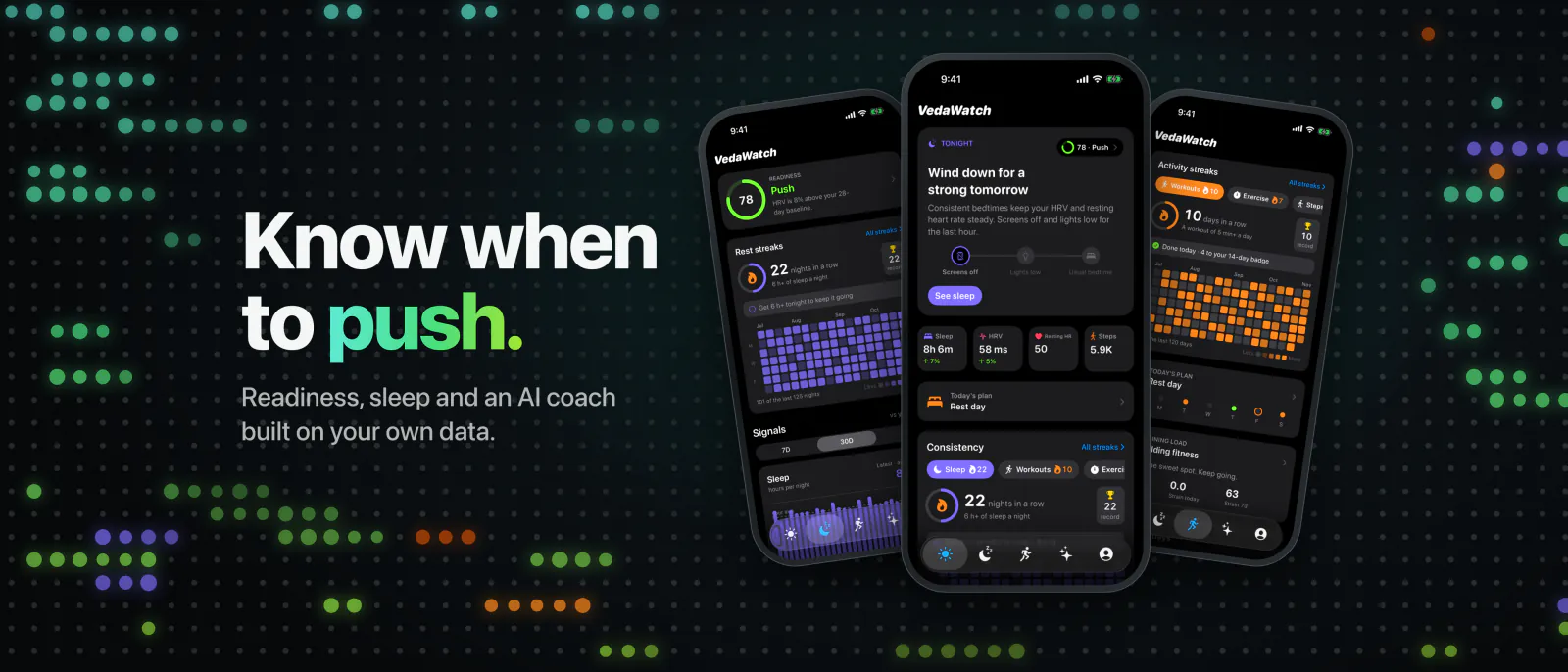
VedaWatch reads the same Apple Health data and is free to start. Each morning it scores readiness from 0 to 100 using your HRV, resting heart rate, sleep and deep sleep compared with your own 14-day baseline, and gives a verdict: Push at 70 or above, Hold from 50, Rest below that. If your resting heart rate is more than 3 bpm above normal, a Push becomes a Hold. The readiness card lists the reasons, such as HRV being a set percentage below baseline.
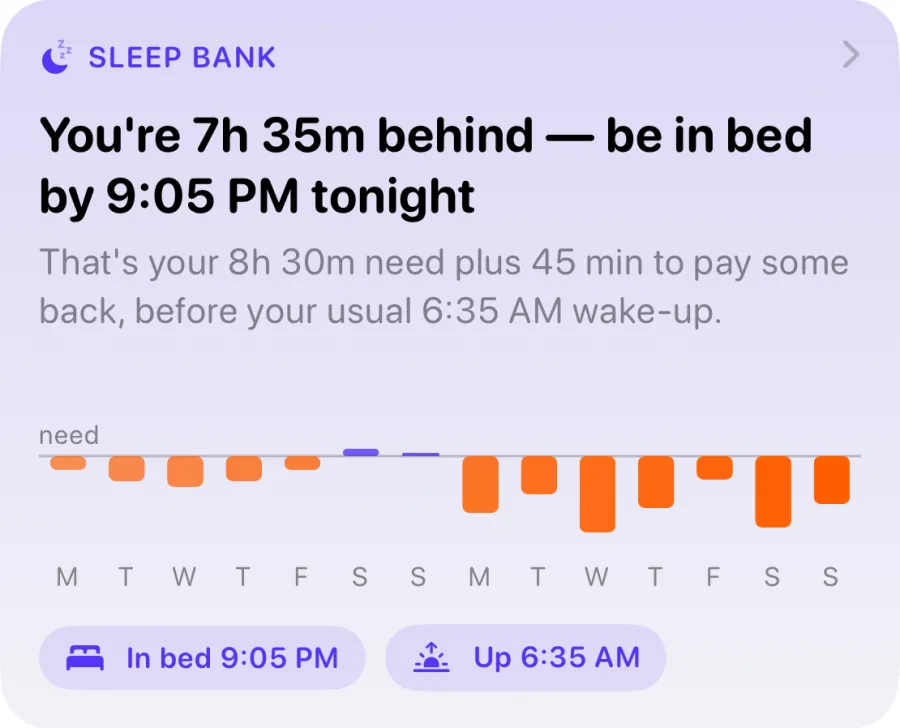
On exertion, VedaWatch works differently from Athlytic. It doesn't give you a live all-day exertion target. It scores each day's workouts as strain on a 0-21 scale and compares your last 7 days of training load with your last 28 (ACWR). Daily Charge is a separate 0-100 energy score that starts from last night's sleep and HRV and drains through the day, and Sleep Bank turns your last 14 nights into how far behind you are and when to be in bed tonight.
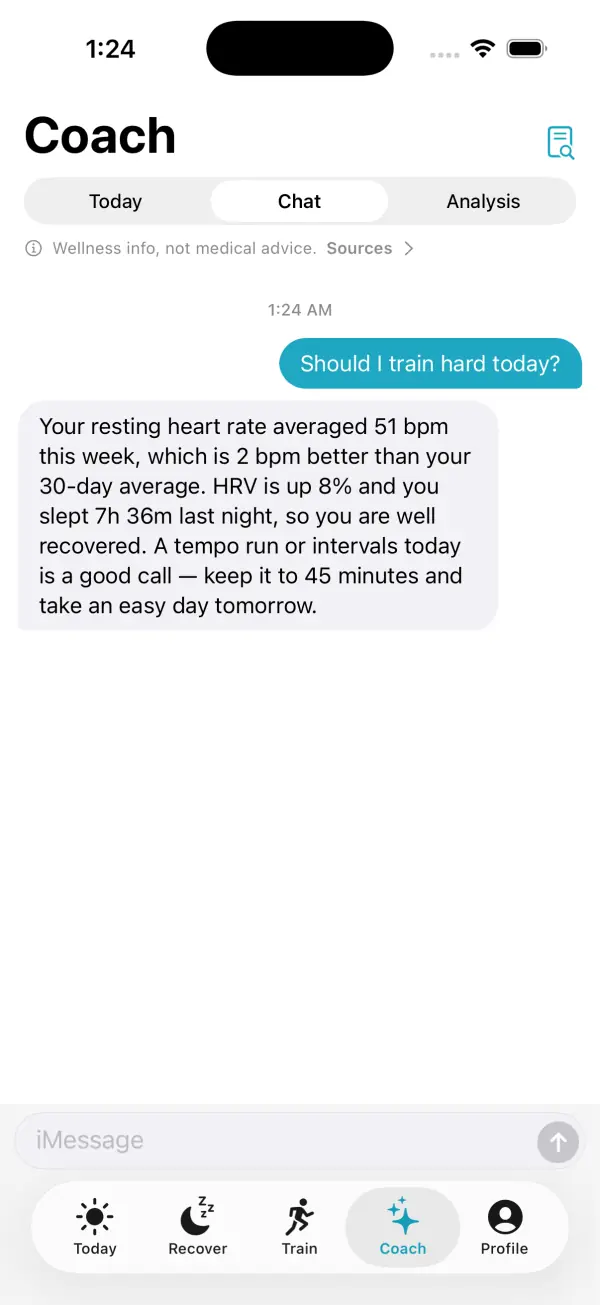
The bigger difference is what comes after the score. The free app suggests one guided session a day on the Train tab, sized to your readiness and skipping muscles you worked hard in the last 48 hours, and the Watch app plays it with timers and spoken cues. It also has a tag journal for habits like alcohol or late caffeine, and smart alerts. VedaWatch Pro ($6.99 a month or $59.99 a year as of November 2026) adds the AI coach (a daily plan, chat about your own numbers, a 30-day analysis and weekly reports), training plans for goals like a 10K that adjust each morning, and optional cloud sync.
Two honest trade-offs. Athlytic's paid plan is cheaper, and Athlytic offers features VedaWatch doesn't, such as a live exertion target and Athlytic Age. On privacy, VedaWatch's free plan works out your scores on your iPhone. The AI coach is off until you turn on AI processing, which sends daily summaries of your recent health data to third-party AI models, without your name or email.
Which Athlytic alternative should you choose?
If Athlytic's recovery and exertion targets work for you and the price suits you, there's little reason to leave; it's a well-made app. Switch when you're missing something specific.
Choose Apple's Readiness if you own a Series 12 or Ultra 4 and just want a simple daily answer for free. Choose Bevel if you want nutrition, strength and lab records in one place and the higher price is fine. Choose Gentler Streak if strain targets make you anxious and you prefer a gentler view of activity. Choose VedaWatch if you want a free readiness score and sleep-debt plan, a daily guided workout tied to your readiness, and the option of an AI coach and adaptive training plan when you want them.
Frequently asked questions
Is Athlytic free?
It's free to download, but the full iPhone and Watch app is part of Athlytic Pro, $4.99 a month or $29.99 a year with a one-week free trial, as of November 2026. Athlytic says there's no lifetime unlock.
Is Athlytic better than Whoop?
They solve the same problem in different ways. Athlytic uses the Apple Watch you already wear, while Whoop is a separate screenless band sold with a membership. Neither is a medical device, and both compare your HRV and resting heart rate with your own baseline.
Does Athlytic work without an Apple Watch?
Mostly no. Its listing says most features need an Apple Watch for HRV and resting heart rate, though some third-party wearables that write HRV to Apple Health also work.
Can I use Athlytic and another recovery app at the same time?
Yes. Both read from Apple Health, so running two apps side by side is a good way to compare them. Just expect different numbers, and judge them on whether they agree on trends.
Will I lose my data if I cancel Athlytic?
Your raw HRV, heart rate, sleep and workout data stay in Apple Health, so any new app can read your history. App-specific things, like Athlytic's own scores and journal entries, don't carry over automatically.
Related guides
- Whoop alternative: 5 ways to get it from your Apple Watch
- Best recovery app for Apple Watch: an honest 2026 roundup
- Apple Watch vs Whoop: do you need a separate recovery band?
- Apple Watch Readiness score: what Recover, Pace Yourself, Ready, and Go For It mean
- Bevel app alternative: what to compare before you switch
- Gentler Streak alternative: 5 options compared for Apple Watch
Sources & further reading
- Athlytic: Fitness & Recovery (App Store listing)
- Athlytic official site: features and pricing
- Apple Support: Use the Readiness app on Apple Watch
- Bevel: AI Health Coach (App Store listing)
- Gentler Streak Workout Tracker (App Store listing)
- VedaWatch (App Store listing)
- Manresa-Rocamora A, et al. Heart Rate Variability-Guided Training for Enhancing Cardiac-Vagal Modulation, Aerobic Fitness, and Endurance Performance: A Methodological Systematic Review with Meta-Analysis. Int J Environ Res Public Health, 2021
This guide is educational, not medical advice, and has not been clinically reviewed. VedaWatch is not a medical device. If you have symptoms or concerns about your heart or health, contact a qualified healthcare professional.
Put your trends in perspective.
Explore HRV, sleep, and recovery with VedaWatch on your iPhone.
Download VedaWatch on the App Store →