 VedaWatch
Workouts & Training
Best exercise to lower blood pressure: what 270 trials show
The best exercise to lower blood pressure, from a 270-trial analysis: wall sits, walking, strength and HIIT compared, a sample week, and when to get medical advice.
By VedaWatch editorial team · · 9 min read
The short answer
In the largest analysis so far, 270 trials with 15,827 people, isometric exercise such as wall sits lowered resting blood pressure the most, by about 8/4 mmHg on average. Aerobic exercise, strength training and HIIT all helped too, by roughly 4 to 6 mmHg systolic. The best plan combines regular brisk activity with a few short isometric sessions each week.
What is the best exercise to lower blood pressure?
On current evidence, isometric exercise, where you hold a muscle under tension without moving, gives the biggest drop in resting blood pressure. The wall sit is the best-studied example. But every main type of exercise helps, and the best one for you is the one you'll keep doing.
The strongest evidence comes from a 2023 analysis in the British Journal of Sports Medicine by Edwards and colleagues. It pooled 270 randomised controlled trials published between 1990 and February 2023, with 15,827 participants, and compared aerobic exercise, dynamic resistance (ordinary weight training), a combination of the two, high-intensity interval training (HIIT) and isometric exercise. Every type lowered resting blood pressure compared with no exercise.
The average reductions in systolic/diastolic blood pressure were:
- Isometric exercise (wall sits, handgrip, leg holds): about 8.2 / 4.0 mmHg.
- Combined aerobic and resistance training: about 6.0 / 2.5 mmHg.
- Dynamic resistance training: about 4.6 / 3.0 mmHg.
- Aerobic exercise (walking, running, cycling): about 4.5 / 2.5 mmHg.
- HIIT: about 4.1 / 2.5 mmHg.
How much difference do a few mmHg make?
A drop of 4 to 8 mmHg sounds small, but across a population even a few points lower means fewer heart attacks and strokes. Exercise also tends to work best where it's needed most: in a 2013 meta-analysis of 93 trials by Cornelissen and Smart, endurance training lowered blood pressure by about 3.5/2.5 mmHg overall, but by about 8.3/5.2 mmHg in groups of people who already had hypertension.
Two caveats keep this in proportion. These are averages, and individual responses vary a lot: some people see a bigger drop, some very little. And exercise is one part of the picture alongside salt, alcohol, weight, sleep and, for many people, medication. If you've been prescribed blood pressure medicine, exercise is a partner to it, not a replacement, unless your doctor decides otherwise.
Isometric exercise and the wall sit for blood pressure
In the Edwards analysis, isometric training ranked first for lowering systolic pressure, and among individual exercises the isometric wall squat (wall sit) ranked highest for systolic pressure. An earlier meta-analysis, Cornelissen and Smart's, also found the largest effect for isometric training, about 10.9/6.2 mmHg, though from only a handful of studies at that time.
Why holding still would lower blood pressure isn't fully understood. Researchers think repeated short holds improve how blood vessels widen and how the nervous system regulates pressure, but the mechanism is still being studied.
Most trials use a simple pattern: four holds of 2 minutes, with 1 to 2 minutes of rest between them, three times a week. In a small 2023 home-based pilot study by Lea and colleagues, 30 adults with normal or high-normal blood pressure did exactly that with wall sits for 4 weeks, and seated systolic pressure fell by about 9 to 14 mmHg in the two training groups. That's a small study, so treat the size of the drop with caution, but the routine itself is short and needs no equipment. Here is how to do it:
- Stand with your back flat against a wall and walk your feet out about two feet in front of you.
- Slide down until your knees are bent. Thighs near parallel to the floor is hard; start higher if that's too much. Keep your knees over your ankles, not past your toes.
- Hold for 2 minutes. Pick a depth where the last 30 seconds feel hard but you can finish without your form breaking down.
- Breathe steadily the whole time. Don't hold your breath or strain: count your breaths out loud if it helps.
- Stand up and rest for 2 minutes. Repeat for four holds in total.
- Do this three times a week, on non-consecutive days. When 2 minutes starts to feel easy, slide a little lower rather than holding longer.
- No wall handy? Isometric handgrip, squeezing a grip device at a modest, steady effort for four 2-minute holds per hand, has also been studied and is the other common isometric option.
Does walking lower blood pressure?
Yes. Aerobic exercise, including brisk walking, has the longest track record of any exercise for blood pressure. A 2015 meta-analysis of walking groups in the British Journal of Sports Medicine found systolic blood pressure about 3.7 mmHg lower by the end of the programmes, along with lower resting heart rate and body fat. In the Edwards analysis, running ranked highest of all individual exercises for lowering diastolic pressure.
Walking also does things isometric holds don't: it builds aerobic fitness, burns more energy, helps with weight, and counts toward the WHO's recommendation of 150 to 300 minutes of moderate activity a week. Brisk means you can talk but not sing. If walking is all you do, aim for 30 minutes on most days, in one go or in 10-minute pieces.
So the honest answer to "walking or wall sits" is both. Wall sits seem to give a larger drop per minute spent, and walking gives broader health benefits. Our walking workout plan builds up to 150 brisk minutes a week over six weeks.
Do weightlifting and HIIT lower blood pressure?
Ordinary strength training lowered resting blood pressure by about 4.6/3.0 mmHg in the Edwards analysis, similar to aerobic exercise, and combining it with aerobic work did better still. The WHO recommends muscle-strengthening activity on at least two days a week for all adults, so it earns its place in a blood pressure plan anyway.
Blood pressure does rise sharply during a heavy lift, especially if you hold your breath and strain. That's why the usual advice for people with high blood pressure is moderate loads you can lift for 10 to 15 controlled reps, breathing out as you lift, rather than one-rep maxes. Blood Pressure UK lists weightlifting and sprinting among the activities to avoid if your blood pressure is very high, because very intense short bursts raise it quickly.
HIIT lowered resting blood pressure by about 4.1/2.5 mmHg, about the same as steady aerobic exercise, in less time. It's a good option once your blood pressure is controlled and you're used to exercising, but it isn't necessary, and steady brisk walking or cycling is the gentler place to start.
How long does exercise take to lower blood pressure?
There are two effects, on two timescales. The first is immediate: after a single session, blood pressure usually dips below its starting level, an effect called post-exercise hypotension. A 2022 review in Frontiers in Physiology notes it can last up to 24 hours, especially in people with raised blood pressure, and that it tends to be larger after harder or longer sessions.
The second is the training effect: your resting blood pressure gradually settles lower. In the wall-sit trials, reductions showed up after about 4 weeks of three sessions a week, while aerobic and strength training trials typically ran for several weeks to a few months. A realistic expectation is a measurable change within one to three months of regular exercise.
The two are linked. Researchers think much of the long-term drop is the sum of those repeated short-term dips, which is why regular exercise matters more than any single hard session, and why the benefit depends on keeping it up. If you track your blood pressure at home, measure at the same times each day, before exercise rather than straight after, and look at weekly averages instead of single readings. Our guide to measuring blood pressure at home covers how.
A sample weekly exercise plan for lower blood pressure
This week combines the three things with the best evidence: regular aerobic activity, strength training twice a week and isometric holds three times a week. It adds up to about 150 minutes of aerobic activity, the WHO minimum. Start with less if you're new to exercise and build up over a few weeks.
- Monday: 30-minute brisk walk.
- Tuesday: wall sits (4 × 2 minutes, 2 minutes rest), then 20 to 30 minutes of full-body strength training at a moderate weight.
- Wednesday: 30 to 40 minutes of walking, cycling or swimming at a pace where you can still talk.
- Thursday: wall sits (4 × 2 minutes), plus a 20-minute walk.
- Friday: full-body strength training, 20 to 30 minutes.
- Saturday: a longer walk, hike or easy run of 45 minutes. Once you're fit and your blood pressure is controlled, you can swap part of it for intervals.
- Sunday: wall sits (4 × 2 minutes) and rest, or a gentle walk.
Is exercise safe with high blood pressure?
For most people with high blood pressure, yes, and it's part of the standard advice. Blood Pressure UK says activity should still be safe at readings between 140/90 and 179/99 mmHg and can help lower it. A few situations call for a doctor first:
- Readings of 180/100 mmHg or higher: speak to your doctor or nurse before starting any new exercise. At 200/110 or higher, Blood Pressure UK advises not starting any new activity and seeing a doctor or nurse as soon as possible.
- You have heart disease, have had a stroke, or have kidney disease, diabetes or other conditions your doctor is managing.
- You take blood pressure medicine: ask whether it affects how you should exercise, and cool down gradually rather than stopping suddenly, since some people feel light-headed after exercise.
- You're pregnant, especially with high blood pressure in pregnancy.
- During any exercise, stop and get medical help for chest pain or pressure, unusual breathlessness, dizziness, a racing or irregular heartbeat, or a severe headache.
- Always breathe through the effort. Holding your breath and straining, the Valsalva manoeuvre, pushes blood pressure up sharply. This matters most in wall sits and heavy lifts.
How VedaWatch helps you build the habit and see the trend
VedaWatch can't tell you whether exercise is lowering your blood pressure on its own, and it doesn't diagnose anything. What it can do is make the routine easier to stick to and keep your readings in one place.
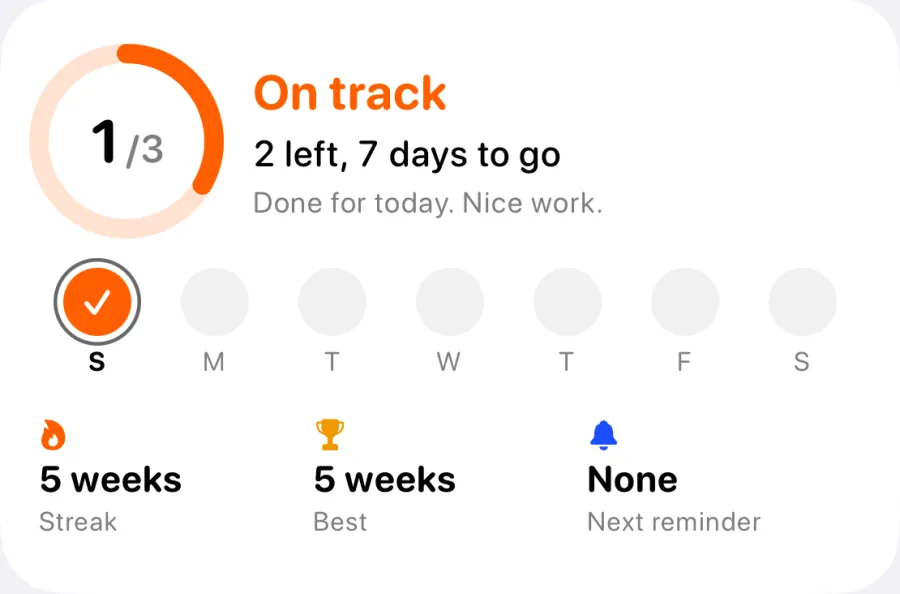
Wall sit is one of the timed exercises in the guided exercise library, with steps and the cue "Breathe, don't brace". You can build your own session from the library, for example four 2-minute wall sits with 2 minutes of rest, play it like any guided session, and put it on days of your week. A weekly target counts your sessions and keeps a streak going.
Under Recover, Heart health has a Blood pressure page. Log readings from any cuff, or connect a cuff app that saves to Apple Health and its readings appear automatically. It shows a trend chart, morning and evening 7-day averages, and American Heart Association reference categories, with a warning for very high readings. Logging is free; a PDF report to share with your doctor is part of VedaWatch Pro. The categories are reference ranges to help you read your numbers, not a diagnosis, and changes to medication are always a decision for you and your clinician.
Frequently asked questions
What is the fastest way to lower blood pressure with exercise?
A single session lowers blood pressure for several hours afterwards, sometimes up to a day. For a lasting drop in resting blood pressure, regular exercise over several weeks is needed, and isometric training such as wall sits showed the largest average effect in trials.
How long should I hold a wall sit to lower blood pressure?
Most studies use four holds of 2 minutes each, with 1 to 2 minutes of rest between them, three times a week. Pick a depth that feels hard by the end of each hold and breathe normally throughout.
Is walking 30 minutes a day enough to lower blood pressure?
For many people, brisk walking for 30 minutes on most days is enough to lower blood pressure by a few mmHg, and it meets the WHO's minimum of 150 minutes a week. Adding strength training or isometric holds may lower it further.
Can exercise replace blood pressure medication?
Sometimes it can reduce the need for medicine, but that's a decision for your doctor. Don't stop or change medication on your own, even if your home readings improve.
Are planks good for blood pressure?
A plank is an isometric exercise, but trials have mostly studied wall sits, handgrip and leg holds, so there's less direct evidence for planks. If you do them, keep breathing and avoid straining.
What exercises should I avoid with high blood pressure?
If your blood pressure is very high or uncontrolled, avoid very heavy lifting, sprinting and other all-out bursts until you've spoken to a doctor. Whatever your readings, avoid holding your breath while you strain.
Related guides
- Apple Watch hypertension notification: how it works, what to do
- How to measure blood pressure at home: cuff, posture and timing
- Walking workout plan: a 6-week brisk walking plan for Apple Watch
- HIIT vs steady state cardio: fitness, fat loss and recovery
- Beginner full body workout plan: 3 days a week for 8 weeks
- Zone 2 training with Apple Watch: find your heart rate range and stick to it
Sources & further reading
- Edwards JJ et al. (2023). Exercise training and resting blood pressure: a large-scale pairwise and network meta-analysis of randomised controlled trials. British Journal of Sports Medicine 57(20):1317-1326. doi:10.1136/bjsports-2022-106503
- Cornelissen VA, Smart NA (2013). Exercise training for blood pressure: a systematic review and meta-analysis. Journal of the American Heart Association 2(1):e004473. doi:10.1161/JAHA.112.004473
- Lea JWD, O'Driscoll JM, Wiles JD (2024). The implementation of a home-based isometric wall squat intervention using ratings of perceived exertion to select and control exercise intensity: a pilot study in normotensive and pre-hypertensive adults. European Journal of Applied Physiology 124(1):281-293. doi:10.1007/s00421-023-05269-2
- Hanson S, Jones A (2015). Is there evidence that walking groups have health benefits? A systematic review and meta-analysis. British Journal of Sports Medicine. doi:10.1136/bjsports-2014-094157
- Farinatti P et al. (2022). Editorial: Post-exercise hypotension: clinical applications and potential mechanisms. Frontiers in Physiology 13:899497. doi:10.3389/fphys.2022.899497
- Bull FC et al. (2020). World Health Organization 2020 guidelines on physical activity and sedentary behaviour. British Journal of Sports Medicine. doi:10.1136/bjsports-2020-102955
- Blood Pressure UK: Exercise, physical activity and your blood pressure
This guide is educational, not medical advice, and has not been clinically reviewed. VedaWatch is not a medical device. If you have symptoms or concerns about your heart or health, contact a qualified healthcare professional.
Put your trends in perspective.
Explore HRV, sleep, and recovery with VedaWatch on your iPhone.
Download VedaWatch on the App Store →