 VedaWatch
Recovery & Apple Watch
How to improve your HRV: habits that actually move the number
HRV responds to weeks of habits, not a single good night. Here's what has real support behind it—sleep consistency, alcohol, aerobic exercise, and stress management—and why fixating on tomorrow's number usually backfires.
By VedaWatch editorial team · · 7 min read
The short answer
Sleep consistency, moderate aerobic exercise, cutting back on alcohol, and managing stress all have real support behind them—but HRV shifts over weeks, not overnight, and consumer wrist trackers are less precise than clinical equipment. Cleveland Clinic's own advice is blunt: focus on your health, not the number.
Set your expectations first
Before changing anything, it's worth knowing what you're working with. Cleveland Clinic notes that consumer wrist trackers can detect HRV changes, but an EKG is more accurate—so a single day's reading is a rough signal, not a lab-grade number. HRV also naturally declines with age, and what's normal varies enough between people that your own trend matters far more than comparing your number to anyone else's.
With that in mind, the habits below are the ones with real support behind them. None of them will move a single overnight reading in a way worth obsessing over—they work on a timescale of weeks.
Sleep consistency is the biggest lever
Cleveland Clinic lists lack of sleep as one of the clearest factors that lowers HRV, alongside aging, stress, and a higher BMI. A regular bedtime and a consistent sleep opportunity of around eight hours give your body the conditions it needs to recover overnight—this tends to matter more than any single supplement or breathing app.
Alcohol has a measurable, next-day effect
A large 2026 analysis of wearable data found that after drinking, resting heart rate during sleep was higher and HRV was lower, sleep was shorter, and next-day activity dropped—effects that scaled with how much was consumed. The same analysis found the damage was smaller when people drank earlier in the day, slept longer afterward, and kept the next day's exercise lighter.
This is observational data, not a controlled trial, so it shows association more than strict cause and effect—but it lines up with what a lot of people notice anecdotally in their own HRV trend after a late night.
Regular aerobic exercise helps—overtraining doesn't
Cleveland Clinic points to regular physical activity as a way to improve the condition of your heart, which in turn supports HRV. The caveat that shows up consistently alongside this advice: more isn't always better. Pushing through unusually hard or prolonged training without adequate recovery tends to suppress HRV rather than raise it, which is part of why a recovery score reacting to a hard training block isn't a malfunction—it's the intended signal.
Managing stress and anxiety
Mental health is directly on Cleveland Clinic's list: reducing and managing stress, and addressing anxiety or depression, can improve HRV. Biofeedback training—using slow, controlled breathing while watching a live readout of your heart rate or HRV—is one method the clinic calls out specifically, and it can also help with stress and anxiety in its own right.
What a single good day won't do
None of this is a reason to chase a higher number day to day. Cleveland Clinic's own framing is worth repeating: your HRV reading will probably just confirm what you already know about your stress level or sleep quality, so the more useful move is taking care of your health in general rather than fixating on the metric itself.
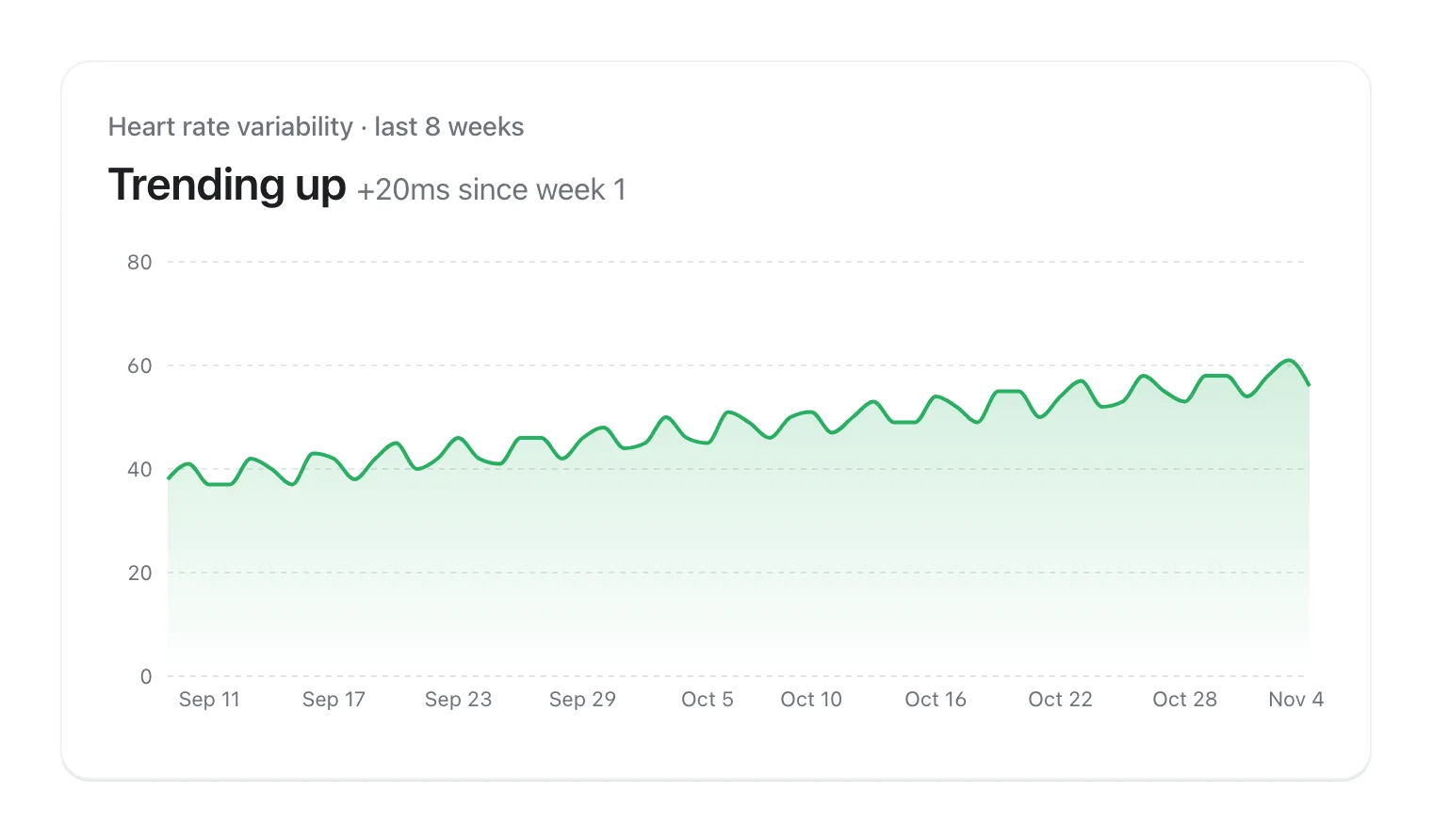
If you're making real changes—sleeping more consistently, drinking less, training smarter, managing stress—give it several weeks and look at the trend, not tomorrow's single reading.
Common questions
How long before I see a difference? Most of these habits work over weeks, not days. A single great night's sleep after a stretch of bad ones is a good start, not proof of a new baseline.
Do supplements improve HRV? There's far less consistent evidence here than for sleep, alcohol, exercise, and stress management. Be skeptical of specific product claims and talk to a healthcare provider before starting anything new.
Is a higher HRV always better? Not necessarily in the short term—HRV can rise for reasons that have nothing to do with fitness. Consistency and a stable-or-improving trend matter more than chasing a single high number.
Watch your trend change, not just today's number
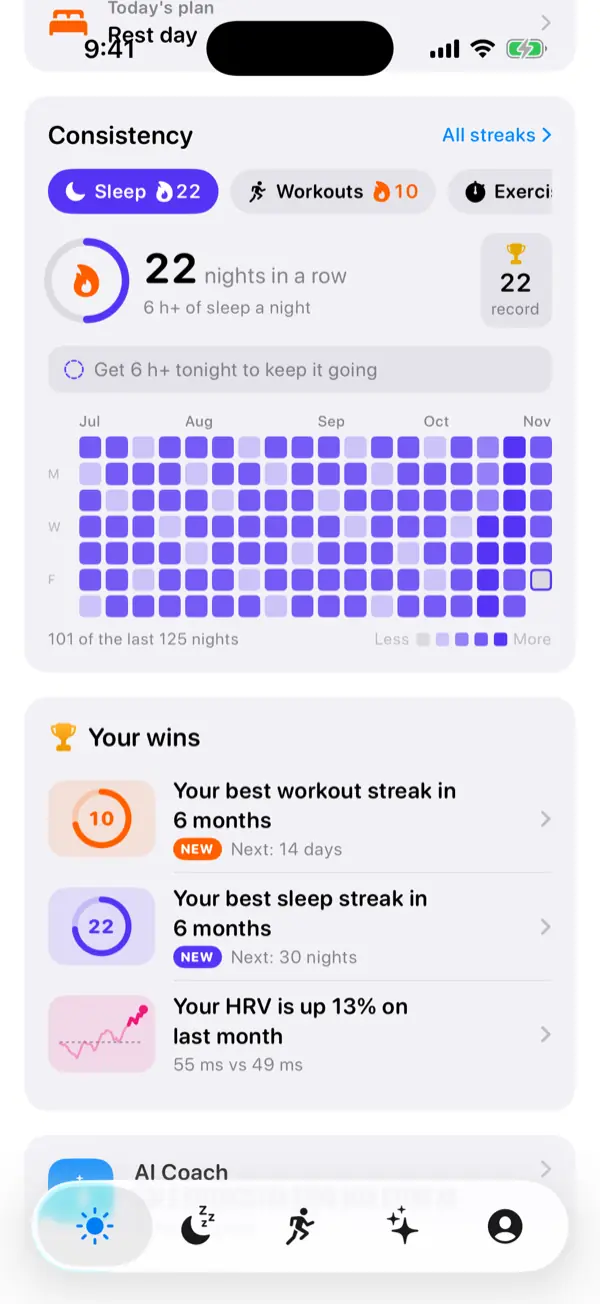
VedaWatch's iPhone Recovery view plots your HRV trend over weeks alongside sleep, resting heart rate, and wrist temperature, so a real shift in your baseline is easier to see than it is by checking Apple Health day by day.
With permission, it works off the data your watch already collects. AI coaching is optional, requires your permission to share relevant data for processing, and is subject to your plan's limits.
Sources & further reading
- Cleveland Clinic: Heart Rate Variability (HRV)
- PLOS Digital Health: Real-world effects of alcohol on heart rate, sleep, and physical activity by age and sex (Grosicki et al.)
This guide is educational, not medical advice, and has not been clinically reviewed. VedaWatch is not a medical device. If you have symptoms or concerns about your heart or health, contact a qualified healthcare professional.
Put your trends in perspective.
Explore HRV, sleep, and recovery with VedaWatch on your iPhone.
Download VedaWatch on the App Store →