 VedaWatch
Lifestyle & Mindfulness
Mindful Minutes on Apple Watch: how tracking works, and what the research actually shows
Apple Watch's Mindfulness app logs Reflect and Breathe sessions as mindful minutes in Apple Health. Here's exactly how that tracking works, plus an honest look at a major meta-analysis of 47 clinical trials on what meditation does and doesn't reliably help with.
By VedaWatch editorial team · · 6 min read
The short answer
Apple Watch's Mindfulness app logs 1-to-5-minute Reflect or Breathe sessions as mindful minutes in Apple Health, alongside sessions from third-party meditation apps. A landmark meta-analysis of 47 clinical trials found moderate evidence that mindfulness meditation reduces anxiety and depression, but low or no evidence of effects on sleep, attention, or weight—and no evidence it beats other active treatments like exercise or therapy. Worth doing for the anxiety benefit it's actually shown, not as a cure-all.
How a Reflect or Breathe session actually works
Apple's Mindfulness app offers two session types. Reflect: you read a short theme and focus your attention for the duration you choose. Breathe: you inhale as an animation grows and exhale as it shrinks, a simple paced-breathing exercise.
Session length is adjustable from 1 to 5 minutes, set from the app itself or in Settings → Mindfulness on the watch. You can also configure start-of-day and end-of-day reminders, additional custom reminders, a weekly summary toggle, breath rate, and haptics—or mute reminders for the day entirely.
What actually gets logged as a mindful minute
Completed Reflect and Breathe sessions are tracked as mindful minutes, viewable in Health on iPhone and iPad and in Fitness on iPhone. Your heart rate during the session also appears on the watch's summary screen afterward, and past readings are reviewable in Health → Heart → Heart Rate → Breathe.
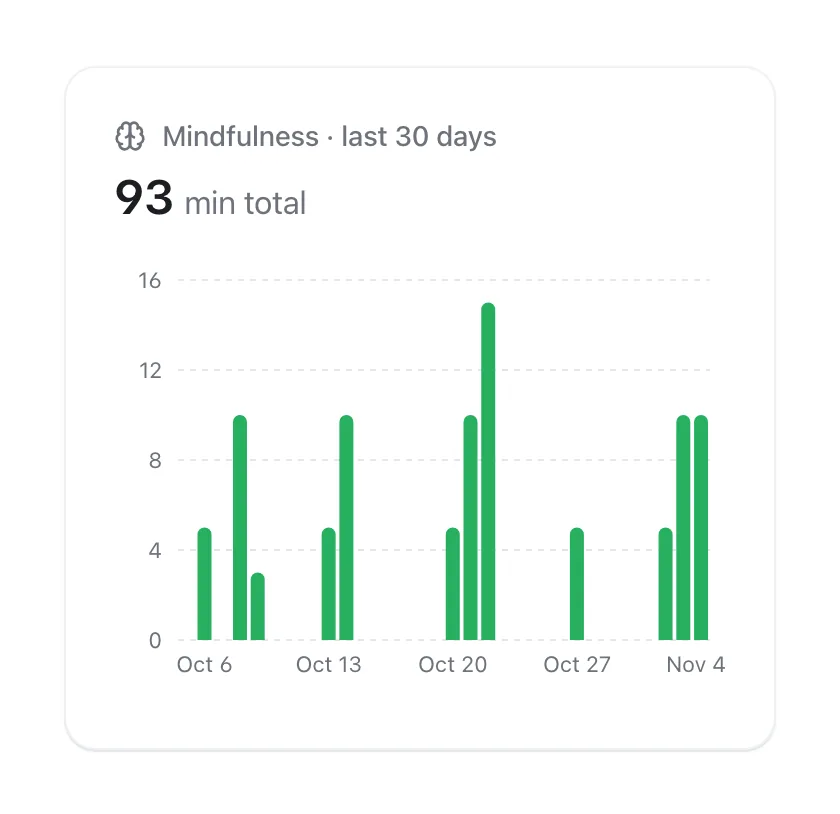
Mindful minutes aren't exclusive to Apple's own app—third-party meditation apps (Calm, Headspace, and others) can write sessions to the same HealthKit mindful-session data type, so your total reflects meditation from any app you use, not just Apple's.
What a major meta-analysis actually found
A widely-cited 2014 JAMA Internal Medicine systematic review and meta-analysis (Goyal et al.) screened over 18,000 studies down to 47 randomized controlled trials with active control groups—meaning participants in the comparison group also did something, not nothing, which controls for the placebo-like effect of simply paying attention to your well-being—covering 3,515 participants total.
The honest result: moderate evidence that mindfulness meditation programs improve anxiety (a moderate effect at 8 weeks that persisted, smaller but still present, at 3-6 months) and similarly improved depression symptoms. But the review found low evidence of effects on stress/distress and quality of life, and low or insufficient evidence of any effect on positive mood, attention, substance use, eating habits, sleep, and weight.
Just as important: the authors found no evidence that meditation programs outperformed other active treatments—medication, exercise, or other behavioral therapies—for the outcomes studied. The honest takeaway isn't "meditation doesn't work"; it's that its best-supported benefit is a real but moderate reduction in anxiety and depression symptoms, not the broader cure-all it's sometimes marketed as.
Common questions
Does mindfulness help me sleep better? The evidence reviewed above found low or insufficient evidence for a sleep effect specifically—worth knowing if that's your main reason for trying it.
Do I need the Apple Watch app, or can I use another meditation app? Either works for tracking purposes—any app that writes to HealthKit's mindful session type will show up as mindful minutes in Apple Health and in VedaWatch.
Is 1-5 minutes long enough to matter? The trials in the 2014 meta-analysis varied widely in program length and typically involved structured multi-week programs, not single short sessions—so think of daily short sessions as building toward that kind of consistent practice, not as a complete substitute for it.
See your mindfulness minutes in VedaWatch
VedaWatch's Mindfulness view reads your logged mindful minutes from Apple Health as a daily trend, whether they came from Apple's own Mindfulness app or a third-party meditation app.
It doesn't add its own meditation content or guided sessions—it's a read-only trend view on top of whatever mindfulness data your other apps and your watch have already recorded.
Sources & further reading
- Apple Support: Start a Reflect or Breathe session on Apple Watch
- JAMA Internal Medicine (2014): Meditation Programs for Psychological Stress and Well-being: A Systematic Review and Meta-analysis (Goyal et al.)
This guide is educational, not medical advice, and has not been clinically reviewed. VedaWatch is not a medical device. If you have symptoms or concerns about your heart or health, contact a qualified healthcare professional.
Put your trends in perspective.
Explore HRV, sleep, and recovery with VedaWatch on your iPhone.
Download VedaWatch on the App Store →