 VedaWatch
Comparisons
Is Apple Watch worth it for fitness? What the research says
Is Apple Watch worth it for fitness? What validation studies say it tracks well and poorly, who benefits most, what apps add, and the honest downsides.
By VedaWatch editorial team · · 9 min read
The short answer
For most iPhone owners who want to move more, yes. Studies find Apple Watch tracks heart rate and steps well, and activity trackers in general add about 1,800 steps a day. It is weak on calories, sleep stages and exact VO2 max, needs daily charging, and is costly if you only want a step counter.
Is Apple Watch worth it for fitness?
If you already use an iPhone and want help moving more, training more consistently or seeing how your body responds to exercise, an Apple Watch is usually worth it. Its heart rate sensor and step counting hold up well in independent research, the Workout app covers most everyday sports, and the data flows into Apple Health, where many other apps can use it.
It is a weaker buy if you mainly want an exact calorie count, lab-grade sleep stages or a precise VO2 max, because those are estimates with real error. It is also a poor fit if you hate charging a device every day or if you use Android, since Apple Watch needs an iPhone.
The rest of this guide goes metric by metric through what the research says, who gets the most out of the watch, what it costs you in money and battery, and what third-party apps add on top of Apple's own features. Product details are as of November 2026.
What does Apple Watch measure accurately?
The best single summary is a 2025 meta-analysis by Choe and Kang in Physiological Measurement, which pooled 56 studies comparing Apple Watch with reference equipment. Across 148 heart rate comparisons, the average bias was just -0.12 beats per minute, and none of the heart rate subgroups crossed the 10% error threshold the authors used for validity. Studies in the review reported an average error of about 4.4% for heart rate.
Steps also did well overall: an average bias of -1.83 steps per minute and an average error of about 8.2%, though some subgroups did go above 10%, so accuracy depends on how and where you move. The authors also noticed a gradual improvement in newer models.
Older lab work points the same way. In a 2017 Stanford study of seven wrist devices worn by 60 volunteers while sitting, walking, running and cycling, the Apple Watch had the lowest overall error for heart rate. Sleep timing is reasonable too: in a 2022 lab study of six wearables against polysomnography, Apple Watch Series 6 agreed with the sleep lab on whether you were asleep or awake 88% of the time, and the authors judged all six devices valid for measuring when and how long you sleep.
One caveat on heart rate: the average being close doesn't mean every reading is. The meta-analysis's limits of agreement were roughly 11 beats per minute either side, so an individual reading during a hard interval can be off by more than the average suggests. The Stanford study also found more error during walking than cycling, and in people with a higher body mass index or darker skin tone.
What Apple Watch gets wrong: calories, sleep stages and VO2 max
Three popular numbers are estimates you should read as trends, not facts. Here is what the research found for each, with the practical takeaway.
- Calories (active energy): in the 2025 meta-analysis, every energy expenditure subgroup exceeded the 10% error threshold, with an average error of about 28% across studies. In the 2017 Stanford study, no device of the seven got energy error below 20%. Worked example: a 600 kcal reading with a typical 28% miss could be off by around 170 kcal either way. Use it to compare your own days, not to decide how much to eat.
- Sleep stages: in the 2022 six-device study, Apple Watch matched the sleep lab on the specific stage (light, deep, REM or awake) 53% of the time, with a kappa of 0.20, and the authors said all six devices need improvement on stages. Trust total sleep and timing more than your deep sleep minutes.
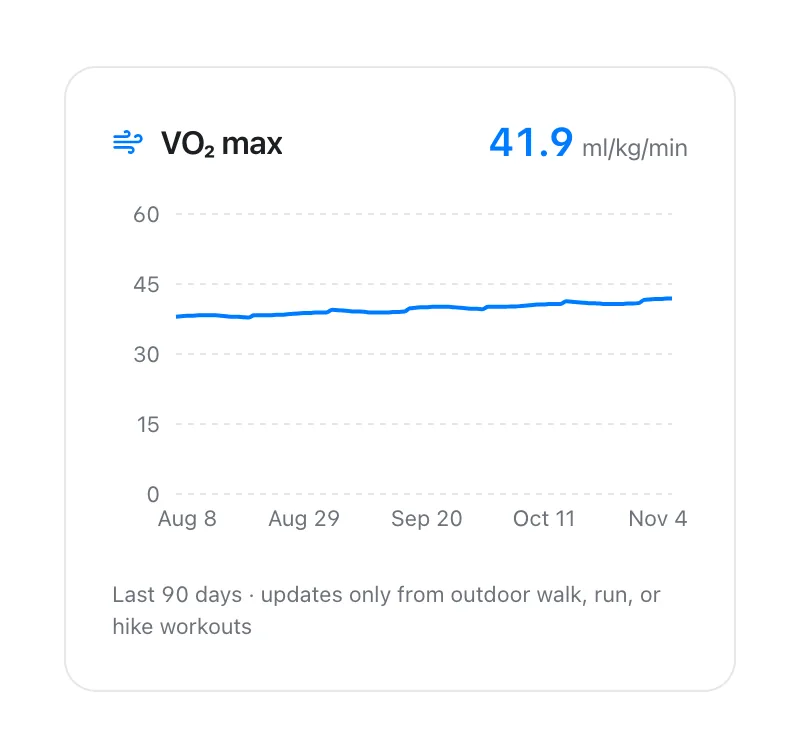
- VO2 max (Cardio Fitness): a 2025 PLOS ONE study tested Apple Watch estimates against a lab treadmill test in 28 adults. The watch underestimated VO2 max by 6.07 mL/kg/min on average, with an average error of 13.3% and limits of agreement from -6.1 to +18.3 mL/kg/min. Most participants were very fit, which the authors say may partly explain the underestimate. Worked example: in a group like that, a watch reading of 42 could sit beside a lab result closer to 48.
- Where VO2 max comes from: Apple says the estimate only updates from Outdoor Walk, Outdoor Run and Hiking workouts, covers a range of 14 to 65 mL/kg/min, and needs several outdoor workouts before the first number appears. If you only train indoors or lift weights, you may rarely get a fresh reading.
Does wearing a fitness tracker actually make you more active?
Accuracy matters less than behaviour. The strongest evidence here is a 2022 umbrella review in The Lancet Digital Health that pulled together 39 systematic reviews and meta-analyses covering 163,992 participants of all ages, healthy and with health conditions.
Taken together, activity trackers improved physical activity by the equivalent of roughly 1,800 extra steps a day and 40 more minutes of walking a day, along with a modest improvement in fitness and about 1 kg of weight loss. The authors judged the benefit clinically important and sustained over time. Effects on blood pressure, cholesterol and quality of life were usually small.
Two honest caveats. First, this is about activity trackers in general, not Apple Watch specifically, so a cheaper band can deliver much of the same nudge. Second, the benefit comes from using the feedback: setting a goal, checking it and adjusting. A watch that sits in a drawer, or that you wear but ignore, adds nothing.
Who gets the most out of an Apple Watch for fitness?
The people who get the most value are the ones whose goals line up with what the watch measures well.
- Beginners and people restarting exercise: the rings, step counts and workout reminders are exactly the kind of feedback the tracker research says helps. You don't need precise numbers to build a habit.
- Walkers and runners: heart rate, pace, distance and heart rate zones are the watch's strengths, and outdoor sessions are what keep the VO2 max trend updating.
- People who train by heart rate: zone training, easy-run pacing and recovery between intervals all lean on the most accurate sensor in the watch.
- People who want to train around recovery: overnight heart rate, HRV and sleep timing give a reasonable picture of how you slept and recovered, especially when you compare each morning with your own recent average.
- Strength trainers get less from the watch alone. It can time sessions and log heart rate, but it doesn't count reps or weights by itself, and calorie estimates for lifting are as rough as any other activity. You'll want an app that logs sets.
- If your goal is weight loss by calorie counting, be careful. With an average calorie error around 28%, eating back your Move calories can quietly cancel out a deficit.
The honest downsides: battery, cost and limits
Battery is the daily cost. Apple rates Apple Watch Series 12 at up to 24 hours, and that test already includes 6 hours of sleep tracking and one 60-minute workout. Apple Watch Ultra 4 is rated at up to 50 hours with two workouts and 12 hours of sleep tracking. Apple Watch SE 3 is rated at up to 18 hours, and that figure doesn't include sleep tracking; Low Power Mode stretches the three to 38, 84 and 32 hours. In practice, wearing a Series 12 or SE 3 day and night means finding a daily charging slot, such as while you shower or have breakfast.
Cost is real. As of November 2026, Apple's US store lists the 42mm Apple Watch Series 12 at $399, which is a lot to pay if all you need is a step count. On the other hand, there's no required subscription for the core fitness features.
Some of Apple's newest fitness features depend on the model. As of November 2026, Apple's built-in Readiness score (0 to 10, from Go for it to Recover) runs only on Series 12 and Ultra 4, and it needs at least 7 nights of overnight vitals before it appears. Older watches still record heart rate, HRV and sleep, but don't get that daily score.
Finally, Apple Watch is a fitness and wellness device, not a doctor. Apple itself says Readiness shouldn't be the only factor in deciding whether to exercise. If you have chest pain, faintness, unusual breathlessness or a heart condition, talk to a clinician before training hard, whatever your watch says.
What do third-party fitness apps add to Apple Watch?
Apple's own apps record a lot but interpret relatively little. Health shows every reading, the Workout app covers sessions, and newer models add Readiness and Training Load. What's often missing is the step from data to a decision: how does this week compare with your normal, and what should today look like?
Because Apple Watch writes to Apple Health, apps you allow can read the same heart rate, HRV, sleep and workout data and fill those gaps. Common additions are a readiness or recovery score on older watches, a weekly HRV trend against your own baseline, an all-day energy gauge, sleep debt tracking, rep and weight logging for the gym, and training plans that adjust to how recovered you are.
When you compare apps, check three things: which Health data it asks to read, whether it explains how its scores are built, and whether the price is a one-off or a subscription. The best-of guides linked below compare specific apps side by side.
How to decide: five questions before you buy
Run through these honestly. If you answer yes to most of the first three, the watch is likely worth it for you.
- Do you use an iPhone, and will you wear the watch most days? Apple Watch needs an iPhone, and the tracker research only helps people who keep wearing it.
- Is your main goal more activity or more consistent training? That's where the evidence is strongest.
- Do you mostly walk, run, hike or train by heart rate? Those are the watch's most accurate measures.
- Is a precise calorie or VO2 max number essential to you? If yes, plan to treat the watch as a trend tracker, or budget for a lab test or a chest strap.
- Can you live with charging it every day (or every two days on Ultra 4)? If not, the sleep and recovery features will have gaps.
How VedaWatch helps you get more from the watch you buy
VedaWatch is an iPhone and Apple Watch app that reads your Apple Health data and turns it into daily decisions, so the watch does more than count steps. It works with Apple Watch Series 4 and later, which matters if your watch doesn't get Apple's own Readiness score.
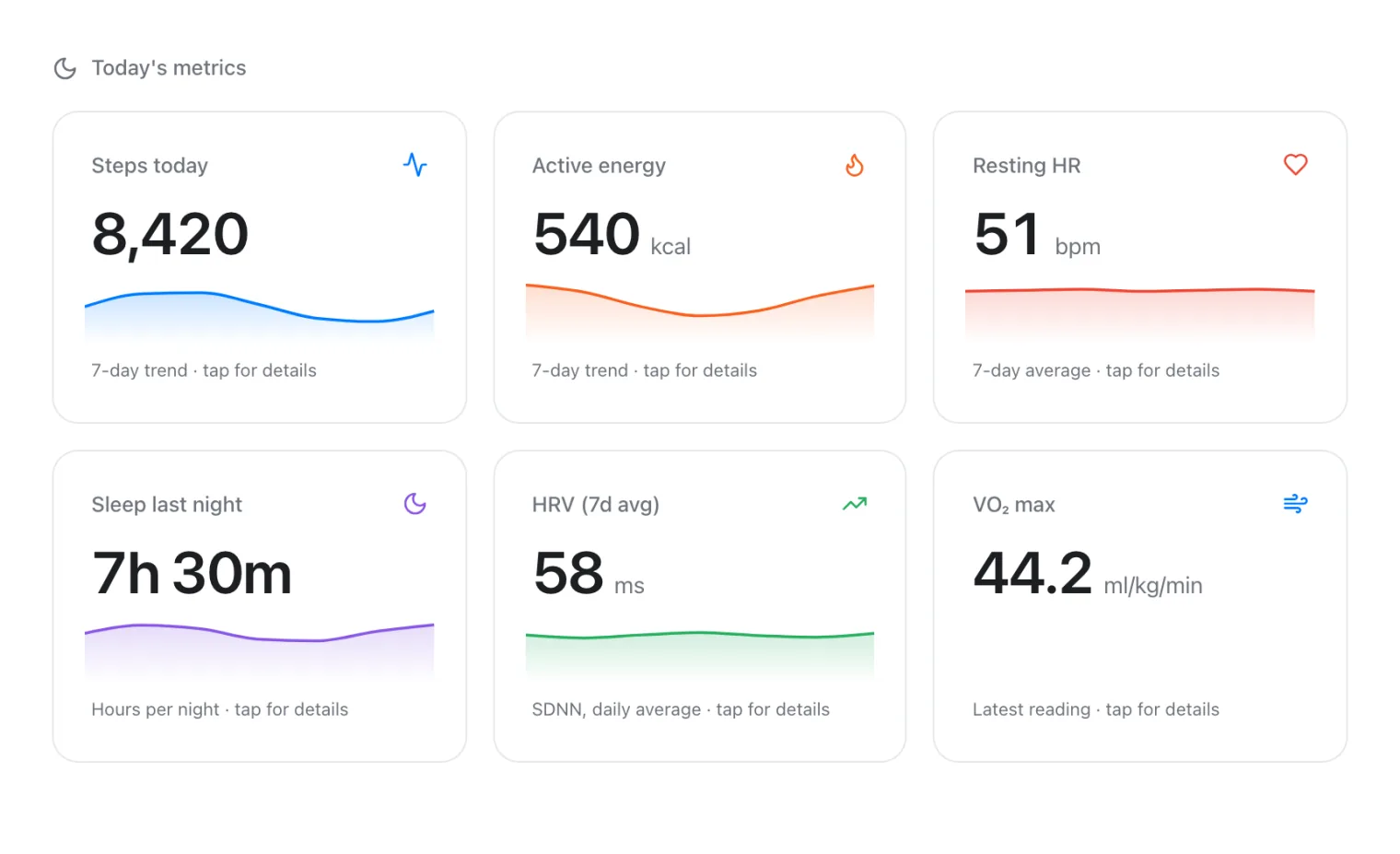
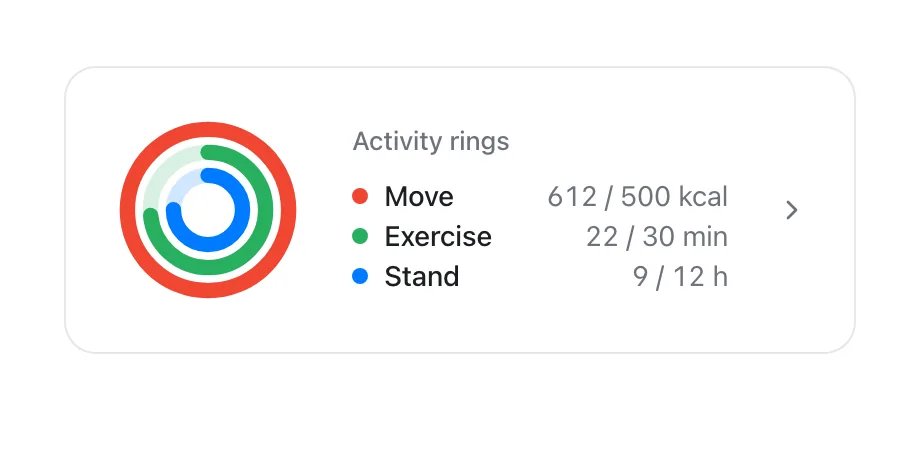
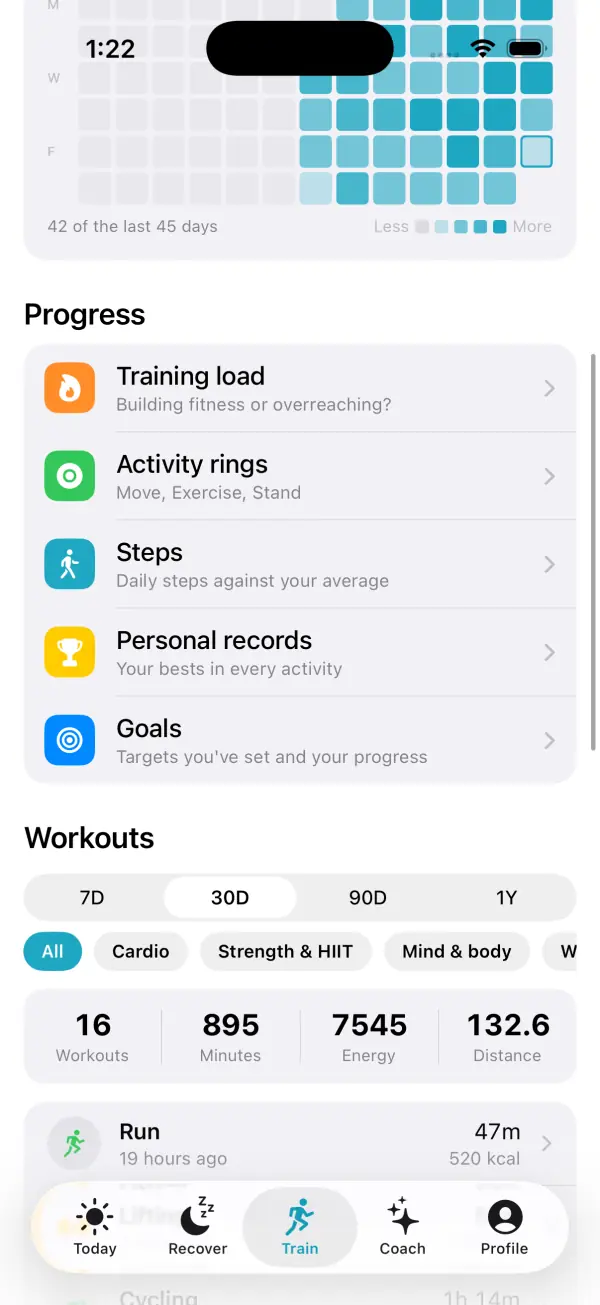
Each morning it gives a 0 to 100 readiness score with a Push, Hold or Rest call and the reasons behind it, built from overnight HRV, resting heart rate, sleep and wrist temperature compared with your recent baseline. The Today screen collects steps, active energy, resting heart rate, sleep, a 7-day HRV average and VO2 max in one place, and the Train tab shows training load, activity rings, steps against your average, personal records and goals. It also includes Daily Charge, an all-day energy gauge, Sleep Bank for sleep debt, and guided strength workouts that log your sets and weights.
The core app is free to download, with readiness included. VedaWatch Pro, at $6.99 a month or $59.99 a year in the US App Store as of November 2026, adds a daily AI coach powered by third-party AI models, AI chat about your own data, smart anomaly alerts and a weekly training plan that adapts to your readiness. Like the watch itself, it's a wellness tool, not medical advice.
Frequently asked questions
Is the Apple Watch SE good enough for fitness?
For steps, heart rate, workouts and rings, yes. As of November 2026, SE 3 skips some newer extras such as Apple's Readiness score and overnight HRV in Vitals, and Apple rates it at up to 18 hours of battery without sleep tracking.
Should I eat back the calories my Apple Watch says I burned?
Be cautious. Calorie estimates are the watch's least accurate measure, with an average error around 28% in a 2025 meta-analysis, so eating all of them back can erase a planned deficit. Use the number to compare days, not to set portions.
Would a cheaper fitness band give me the same benefit?
For simply moving more, often yes. The research showing about 1,800 extra steps a day covers activity trackers in general. The Apple Watch earns its price if you'll use workouts, heart rate zones, the iPhone integration and apps built on Apple Health.
Do I need to wear my Apple Watch to bed for fitness tracking?
Not for workouts or steps, but recovery features depend on it. Apple's Readiness needs at least 7 nights of overnight vitals, and HRV-based scores from apps are built mostly from readings taken while you sleep.
Is Apple Watch VO2 max accurate enough to track progress?
It's better for direction than for the exact number. A 2025 lab study found it underestimated VO2 max by about 6 mL/kg/min in a mostly very fit group, so compare your reading with your own past readings rather than with lab charts.
Related guides
- Is Apple Watch HRV accurate? What the validation studies actually show
- Apple Watch sleep tracking: how accurate is it, and what to do when it's wrong
- Apple Watch VO2 max (Cardio Fitness): what it measures and how accurate it is
- Are Apple Watch calories accurate? Cardio and strength studies
- Which Apple Watch is best for health tracking? (2026 guide)
- Best Apple Watch apps for fitness in 2026, picked by goal
Sources & further reading
- Choe JP, Kang M (2025). Apple watch accuracy in monitoring health metrics: a systematic review and meta-analysis. Physiological Measurement. doi:10.1088/1361-6579/adca82
- Shcherbina A et al. (2017). Accuracy in Wrist-Worn, Sensor-Based Measurements of Heart Rate and Energy Expenditure in a Diverse Cohort. Journal of Personalized Medicine 7(2):3. doi:10.3390/jpm7020003
- Lambe R et al. (2025). Investigating the accuracy of Apple Watch VO2 max measurements: A validation study. PLOS ONE 20(5):e0323741. doi:10.1371/journal.pone.0323741
- Miller DJ, Sargent C, Roach GD (2022). A Validation of Six Wearable Devices for Estimating Sleep, Heart Rate and Heart Rate Variability in Healthy Adults. Sensors 22(16):6317. doi:10.3390/s22166317
- Ferguson T et al. (2022). Effectiveness of wearable activity trackers to increase physical activity and improve health: a systematic review of systematic reviews and meta-analyses. The Lancet Digital Health 4(8):e615-e626. doi:10.1016/S2589-7500(22)00111-X
- Apple: Apple Watch battery information
- Apple Support: Understand your readiness score on Apple Watch
- Apple Support: About Cardio Fitness levels on Apple Watch
This guide is educational, not medical advice, and has not been clinically reviewed. VedaWatch is not a medical device. If you have symptoms or concerns about your heart or health, contact a qualified healthcare professional.
Put your trends in perspective.
Explore HRV, sleep, and recovery with VedaWatch on your iPhone.
Download VedaWatch on the App Store →