 VedaWatch
Workouts & Training
How to improve your VO2 max, and get Apple Watch to show it
Both steady cardio and high-intensity intervals raise VO2 max, and intervals tend to raise it a bit more. Here's what the research supports, a simple weekly structure, how fast to expect change, and how to make sure Apple Watch's Cardio Fitness estimate keeps up.
By VedaWatch editorial team · · 7 min read
The short answer
Combine mostly easy cardio with one or two weekly interval sessions, such as four 4-minute hard efforts. Expect measurable gains over a couple of months, faster if you're starting from low fitness. Apple Watch only updates Cardio Fitness from outdoor walks, runs, and hikes, so log some of your training that way.
Why VO2 max is worth improving
VO2 max is the most oxygen your body can use during hard exercise. It's a widely used measure of cardiorespiratory fitness. A large 2009 meta-analysis in JAMA found that higher cardiorespiratory fitness was linked to lower risk of death from any cause and from cardiovascular disease, which is why Apple calls it a predictor of long-term health.
The encouraging part is that it responds to training. Genetics and age set the limits, but most people who aren't already highly trained can raise their VO2 max noticeably.
What the research says works
A 2015 meta-analysis in Sports Medicine compared continuous endurance training with high-intensity interval training in healthy adults aged 18–45. Both produced large improvements in VO2 max compared with no exercise. Intervals came out slightly ahead, though the difference between the two was small.
One frequently cited protocol comes from a 2007 study in Medicine & Science in Sports & Exercise. Moderately trained men who did four 4-minute intervals at 90–95% of maximum heart rate, with 3 minutes of easier recovery between them, improved VO2 max more than groups doing the same total work as steady moderate or threshold training.
The takeaway isn't that steady cardio is useless. Easy cardio builds the base that makes hard sessions possible and safe, and it improves VO2 max on its own. Adding some harder intervals is usually the fastest way to keep improving.
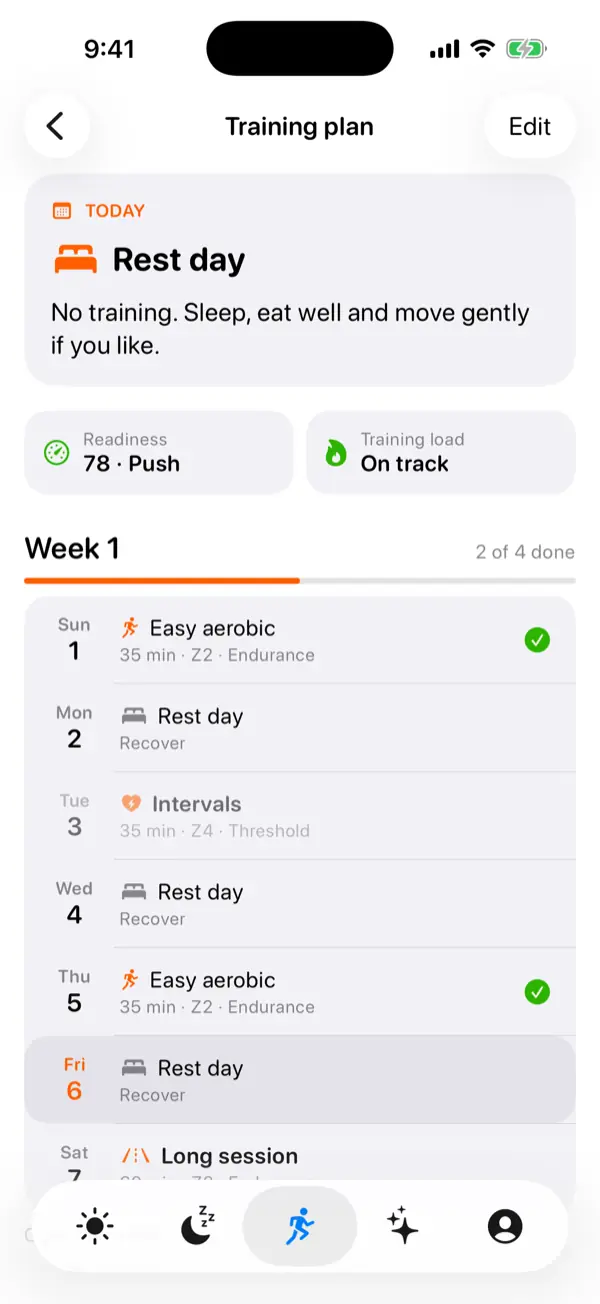
A simple weekly structure
This is a starting point for healthy adults who already exercise. If you're new to exercise, or have a heart condition or other health concerns, start with easy cardio and check with a doctor before adding hard intervals.
- Two or three easy sessions of 30–60 minutes at a conversational, Zone 2 effort: walking, jogging, cycling, or rowing.
- One interval session: warm up for 10 minutes, then do four 4-minute hard efforts with 3 minutes of easy movement between them, then cool down. The efforts should feel hard but steady, not an all-out sprint.
- Optionally, a second, shorter interval session once the first feels manageable, keeping at least one easy day between hard ones.
- Keep at least one rest day, and use an easier week every month or so if you're training consistently.
How fast VO2 max improves
Studies often show meaningful gains within 6–12 weeks of regular training. People who start with lower fitness usually improve faster and further than people who are already fit. Gains also tend to be larger in younger people and in longer training programs.
Expect progress to slow over time. Once you've built a good base, further improvement takes more consistent and more specific work, and VO2 max naturally declines with age. Staying steady as you get older is a good result.
How to make sure Apple Watch reflects your progress
Apple Watch estimates VO2 max, which Apple calls Cardio Fitness, only from Outdoor Walk, Outdoor Run, and Hiking workouts in the Workout app. Indoor treadmill runs, cycling, rowing, and gym sessions don't update the estimate, even though they still improve your fitness.
If most of your training happens indoors or on a bike, your Cardio Fitness score can stay flat while your real fitness rises.
- Log at least one Outdoor Walk, Outdoor Run, or Hiking workout a week, so the estimate has fresh data.
- Keep your weight up to date in the Health app. VO2 max is measured per kilogram of body weight, so an old weight skews the estimate.
- Check your trend in Health → Browse → Heart → Cardio Fitness using the 6M or Y view. The estimate updates in steps, so look at the trend over months.
- Remember the estimate is approximate. Independent testing has found it tends to overestimate low fitness and underestimate high fitness, so the direction of your trend matters more than the exact number.
Common questions
Does walking improve VO2 max? Yes, especially if you're starting from low fitness. Brisk or hilly walking is a good first step. As you get fitter, you'll need harder efforts to keep improving.
Does losing weight raise VO2 max? It raises the number Apple shows, because VO2 max is reported per kilogram of body weight. Your heart and lungs' actual capacity doesn't change from weight loss alone.
Why hasn't my Cardio Fitness score changed even though I'm training? The most common reason is that your training isn't logged as Outdoor Walk, Outdoor Run, or Hiking. Also give it time: the estimate changes gradually.
Is high-intensity interval training safe for everyone? Not without preparation. Build up a base of easier cardio first, and talk to a doctor before starting hard training if you have heart disease, symptoms like chest pain, or other health concerns.
Track VO2 max with your training in VedaWatch
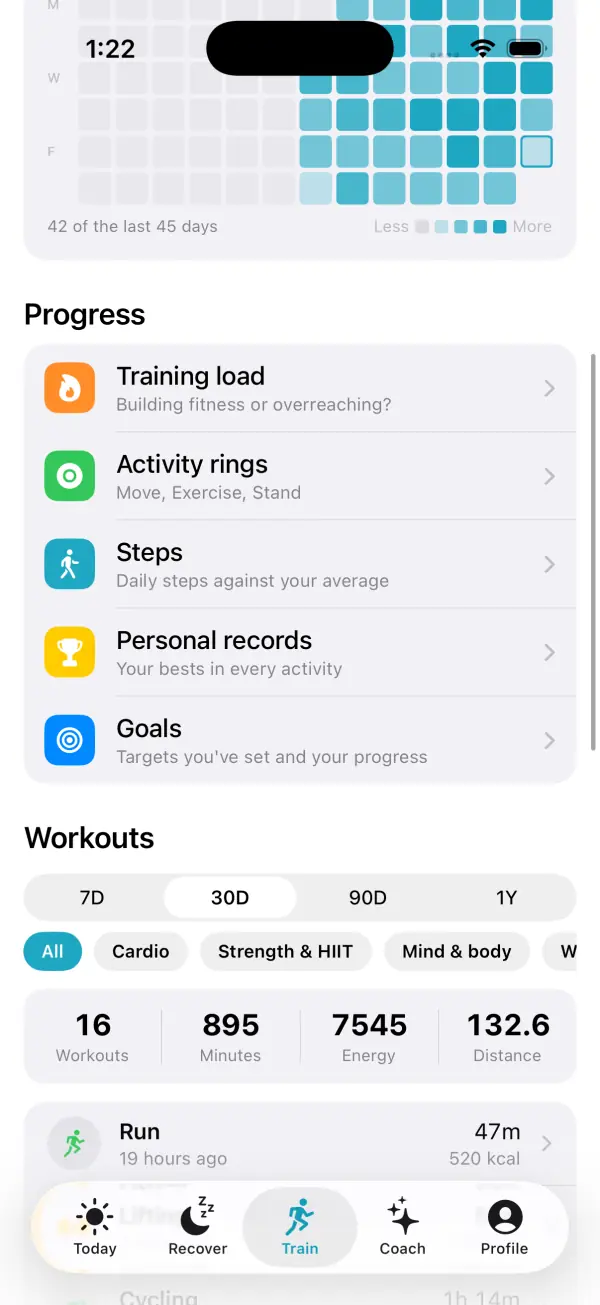
VedaWatch shows your Cardio Fitness trend from Apple Health over the last 90 days, next to your training load and recovery. That makes it easier to see whether a block of interval training is moving your score.
VedaWatch displays the estimate Apple Watch has already produced. It doesn't recalculate VO2 max, so the outdoor-workout advice above still applies.
Sources & further reading
- Sports Medicine (2015): Effectiveness of High-Intensity Interval Training (HIT) and Continuous Endurance Training for VO2max Improvements: A Systematic Review and Meta-Analysis of Controlled Trials (Milanović et al.)
- Medicine & Science in Sports & Exercise (2007): Aerobic high-intensity intervals improve VO2max more than moderate training (Helgerud et al.)
- JAMA (2009): Cardiorespiratory Fitness as a Quantitative Predictor of All-Cause Mortality and Cardiovascular Events in Healthy Men and Women: A Meta-analysis (Kodama et al.)
- Apple Support: Track your cardio fitness levels
This guide is educational, not medical advice, and has not been clinically reviewed. VedaWatch is not a medical device. If you have symptoms or concerns about your heart or health, contact a qualified healthcare professional.
Put your trends in perspective.
Explore HRV, sleep, and recovery with VedaWatch on your iPhone.
Download VedaWatch on the App Store →