 VedaWatch
Strength Training
Deload week: what it is, when to take one and how to do it
What a deload week is, how often lifters take one, whether to cut volume or intensity, the signs you need one (HRV and readiness included) and a sample week.
By VedaWatch editorial team · · 11 min read
The short answer
A deload week is a planned week of easier training, usually about 7 days every 4 to 6 weeks, that lets fatigue fall while you keep your habits and skills. The simplest version keeps your exercises and weights but cuts sets by roughly a third to a half and stops every set well short of failure.
What is a deload week?
A deload week is a short, deliberate drop in training stress. You keep training, but you do less of it or do it less hard, so the tiredness that builds up over weeks of progressive training has a chance to clear. An international panel of strength and physique coaches agreed on this definition in 2023: a period of reduced training stress designed to reduce physical and mental fatigue, promote recovery and prepare you for the training that follows.
A deload is not a week off. You still show up, still do your main lifts and still practise the movement patterns. What changes is the dose: fewer sets, fewer reps per set, lighter weights, more reps left in the tank, or some combination. When the week ends, you go back to your normal program, often at the point where you left it.
Deloads are common practice rather than proven science. In a 2024 survey of 246 competitive strength and physique athletes, every single one said they deloaded, mainly to manage energy and fatigue. Controlled studies are still few, which is why the rest of this guide leans on how you respond, not on a fixed rule.
Do you actually need a deload? What the research says
The best direct test so far is a 2024 study by Coleman and colleagues. Thirty-nine young, resistance-trained men and women followed a 9-week high-volume program. One group stopped lifting entirely for one week at the midpoint; the other trained straight through. Muscle growth, local endurance and power ended up similar in both groups, but the group that trained continuously gained more lower-body strength. The authors concluded that programs of 9 weeks or less with up to about 90 total sets a week don't seem to need a deload for young people to recover.
Two things are worth noticing. First, that was a full week off, not a lighter week of training, so it doesn't tell us what a typical deload does. Second, the volumes and timescales were modest. People who train for years, push hard sets close to failure, or juggle training with poor sleep and a stressful job face more accumulated fatigue than a 9-week study can capture.
What research does show clearly is that a lighter week costs you very little. A review of minimum training doses found that strength and muscle size in younger adults can be maintained for up to 32 weeks with as little as one strength session a week and one set per exercise, as long as the load stays heavy. Older adults may need up to two sessions a week and 2 to 3 sets per exercise to keep muscle size. A single week of reduced volume is far gentler than that.
So the honest answer: a deload is cheap insurance, not a magic boost. If you're progressing, sleeping well and keen to train, you may not need one on a schedule. If progress has stalled and you feel worn down, a lighter week is a low-risk thing to try first.
How often should you take a deload week?
Coaches typically place a deload every 4 to 6 weeks, for about 7 days, although deloads can range from a single lighter session to two weeks. The 2024 athlete survey found almost the same pattern in practice: an average deload of 6.4 days, taken roughly every 5 to 6 weeks, with wide variation between people.
There are two ways to time it, and most experienced lifters mix them. A planned deload sits at the end of a training block, for example three building weeks and then a lighter fourth week. A reactive deload happens when your body tells you it's time, whatever week of the block you're in. In the 2023 coach consensus, all of the experts in the final round agreed a deload can happen whenever an athlete feels physically and mentally fatigued, regardless of the week of the program, and all agreed it could be driven by the coach, the athlete or the data.
A useful rule of thumb: plan a lighter week roughly every 4 to 8 weeks, then move it earlier if warning signs pile up, or skip it if you're clearly still progressing and feel fresh. Newer lifters, who usually recover and progress quickly, can generally go longer between deloads than people running high-volume programs close to failure.
How to deload: cut volume, intensity or both?
There are three levers: volume (sets and reps), intensity (how heavy the weight is) and effort (how close each set gets to failure). The coach panel agreed you can reduce volume by cutting sets, cutting reps or training on fewer days, and 95% agreed that intensity can stay the same while volume drops. Athletes in the survey usually did a bit of everything: fewer reps per set, fewer sets per week, slightly lighter loads and more reps in reserve, while keeping the same training days and the same exercises.
If you only change one thing, cut volume and keep the weight. Maintenance research suggests heavy relative load is what holds on to strength, while large cuts in sets do little harm for a week or more. It also keeps the bar feeling familiar, so your first session back doesn't feel like a stranger's weight.
Pick the version that matches the problem you're trying to solve:
- Volume deload (best default): same exercises, same weights, about a third to a half fewer sets, and stop each set with 3 or more reps in reserve. Good when you feel generally tired or sore.
- Intensity deload: same sets and reps, but noticeably lighter weights so every set feels easy. Good when joints or connective tissue feel beaten up from heavy loading.
- Combined deload: fewer sets and lighter weights. Good after a very hard block, a competition or a period of high life stress.
- Frequency deload: drop one training day and keep the others normal or slightly reduced. Good when the problem is time and sleep rather than the training itself.
- Whichever you choose, keep the main multi-joint lifts in, keep your usual schedule where you can, and don't swap in brand-new exercises that leave you sore.
Signs you need a deload week
In the athlete survey, the most common triggers for an unplanned deload were stalled performance and periods of increased muscle soreness or joint aches. Coaches add mental fatigue and dropping motivation. The pattern matters more than any one day: a single bad session is normal, but several signs lasting a week or more suggest fatigue is building faster than you recover.
Watch for a cluster of these:
- Performance: the same weight feels heavier, you miss reps you hit last week on more than one lift, or your estimated one-rep max has been flat or falling for several weeks.
- Body: soreness that lingers into the next session for the same muscle, or nagging aches in elbows, knees, shoulders or the lower back.
- Mind: you dread sessions you usually enjoy, or you can't focus during sets.
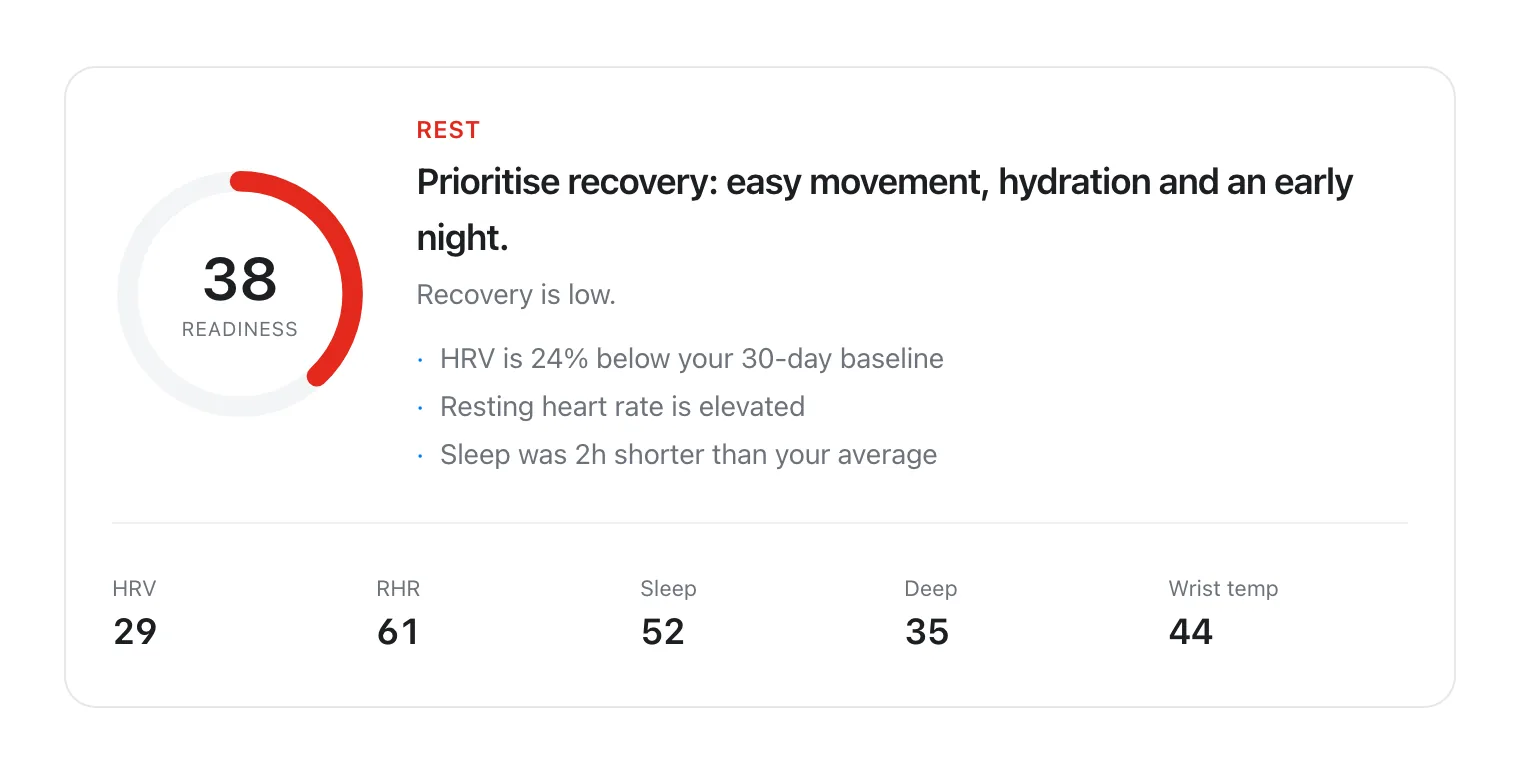
- Sleep and recovery data: shorter or more broken sleep, resting heart rate drifting above your usual, or overnight HRV trending below your normal range for a week or more.
- Load: your weekly training volume has jumped well above your recent average, for example after adding sessions or a new program.
Using HRV and readiness trends to time a deload
Heart rate variability (HRV) measured during sleep is a popular way to see recovery, and Apple Watch records it automatically. Research in endurance athletes recommends averaging HRV over several days rather than reacting to a single morning, because one reading bounces around with alcohol, a late meal, stress or a poor night. The same researchers found that in highly trained athletes both a falling and an unusually rising HRV could accompany poor adaptation, so HRV is a clue to combine with performance and how you feel, not a verdict on its own.
A practical way to read it: one low morning is just a lighter day. A weekly average that stays clearly below your own baseline for a week or more, especially alongside a higher resting heart rate, worse sleep and stalled lifts, is a good reason to bring a planned deload forward. If your HRV and readiness look fine but your lifts have stalled and your joints ache, a deload can still make sense; the watch can't see tendons or motivation.
Compare against your own history, not other people. HRV varies a lot between individuals, so a value that is low for you might be high for someone else. And remember that illness, travel and big life stress can lower HRV too. If a low trend comes with feeling unwell, rest and recover first, then worry about the training plan.
Example deload week (4-day upper/lower split)
Here is how a volume deload might look for someone on a 4-day upper/lower program. The weights are an example for one lifter; use your own numbers. In a normal week each session has two main lifts at 4 sets each, at a weight that leaves 1 to 2 reps in reserve, plus two accessories at 3 sets each. In the deload week, the days and the main weights stay the same; sets drop and every set ends with plenty left.
Total weekly sets fall from 56 to 32, a cut of a little over 40%, which is still several times more than the one set per exercise per week shown to maintain strength. Cardio can continue at an easy, conversational pace. Sleep, food and protein stay at your normal levels; a deload is not the time to diet hard.
- Day 1, upper: bench press 2 x 6 at your usual 80 kg (normally 4 x 6), stop with 3 or more reps in reserve. Row 2 x 8. Two accessories at 2 sets each.
- Day 2, lower: squat 2 x 5 at your usual 100 kg (normally 4 x 5). Romanian deadlift 2 x 8. Two accessories at 2 sets each.
- Day 3: rest, or a 20 to 30 minute easy walk or bike ride.
- Day 4, upper: overhead press 2 x 8. Pull-ups or pulldowns 2 x 8. Two accessories at 2 sets each.
- Day 5, lower: deadlift 2 x 3 at a comfortable working weight. Split squat 2 x 8 per leg. Two accessories, such as a plank and calf raises, at 2 sets each.
- Days 6 and 7: rest or easy activity. Next Monday, go back to your normal sets at the weights you were using before the deload, or the next small step up if every set felt easy.
Deload vs rest week vs taper, and what to do afterwards
A deload keeps you training at a lower dose. A rest week stops training completely; it is better kept for illness, injury or a planned holiday, and the Coleman study suggests a full week off can cost a little strength in the short term. A taper is different again: a planned reduction in volume before a competition or a max-out day, usually while keeping weights heavy, so you peak on a specific date.
After the deload, return to your normal program rather than trying to make up for lost time. Most people pick up at the weights they used before the deload, and some feel strong enough to take the next small step. If you still feel flat after a week back, the problem may not be training volume. Look at sleep, total food intake, stress and whether the program itself needs changing.
When to see a doctor: if fatigue, poor performance or a low mood persist after one or two lighter weeks, or you notice chest pain, fainting, a racing or irregular heartbeat, unexplained weight loss or frequent illness, stop pushing and talk to a doctor. Prolonged unexplained underperformance can have medical causes, and overtraining syndrome is diagnosed by ruling those out, not by a wearable.
How VedaWatch helps you plan and spot a deload
VedaWatch reads your Apple Health data and turns it into a daily readiness score with a Push, Hold or Rest verdict and plain-language reasons, such as HRV below your recent baseline or a short night. It's general fitness guidance, not medical advice.
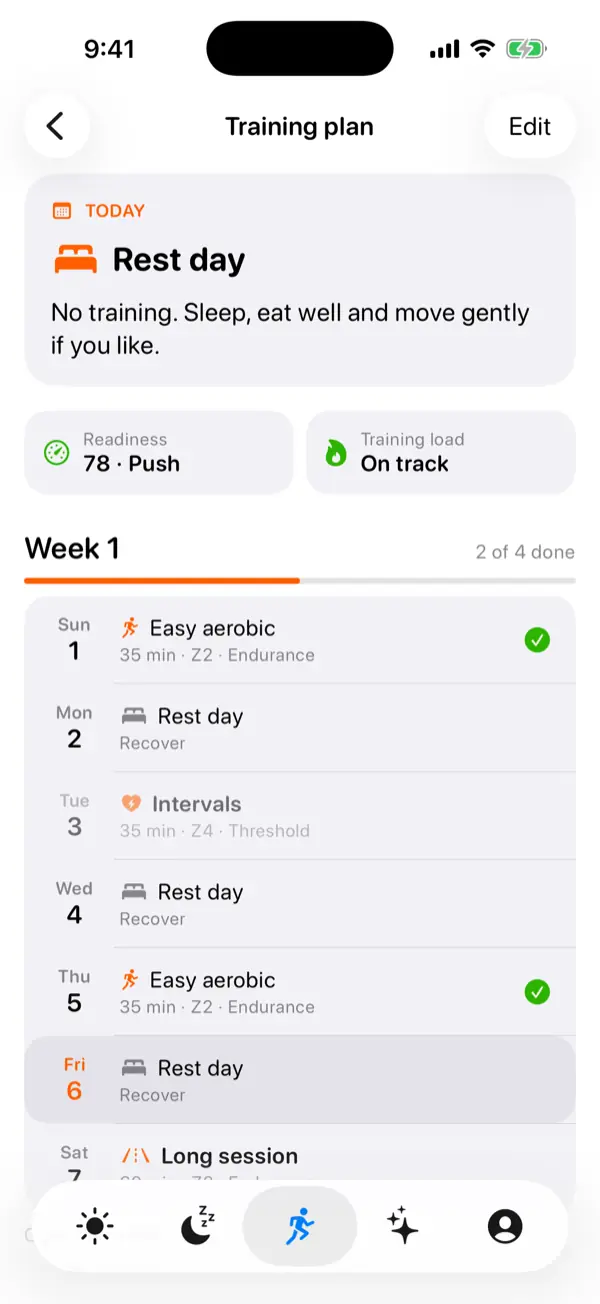
If you use a training plan with the Get stronger goal (a Pro feature, $6.99 a month or $59.99 a year on the US App Store), the plan lays out full-body strength sessions with easy cardio between them and grows volume a little each week, with a lighter week every fourth week. The plan screen tells you when you're in one. Each morning it also checks the day against your readiness and training load: on a Hold day, a strength session becomes lighter, with 2 sets per exercise and 3 reps left in the tank, and on a Rest day it becomes very easy recovery while key sessions move to a later day.
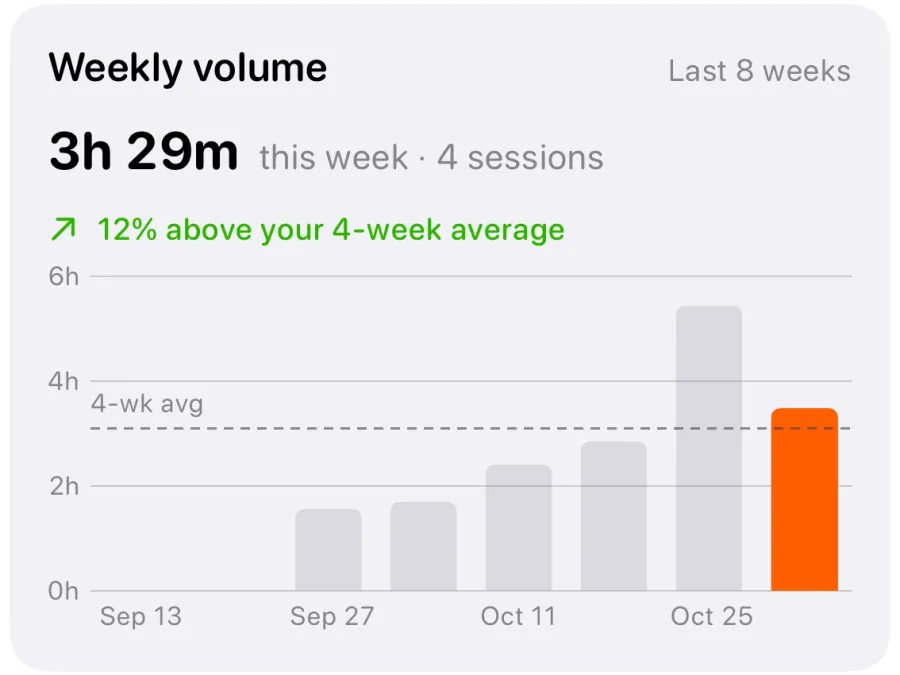
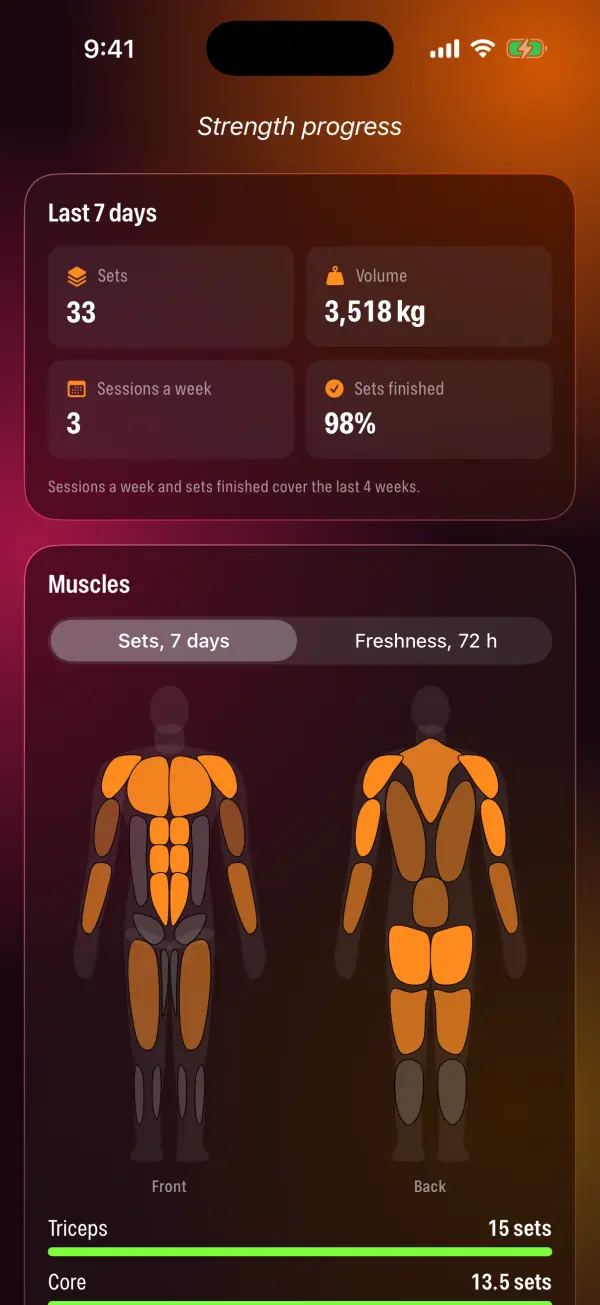
The daily guided strength coach on the Train tab, which doesn't need Pro, builds each session from your history. If you miss your reps twice in a row at the same weight, it takes about 10% off to rebuild, and on easy days it holds weight and reps instead of adding more. Strength progress shows your sets, volume and estimated one-rep max, and its Trends card for the last 4 weeks points out lifts whose estimate is flat or falling. The Weekly volume card shows your training time against your 4-week average, so you can see a climbing load before it catches up with you.
With Pro and AI features turned on, you can also ask the AI Coach whether your recent HRV, sleep and lifting suggest a deload. It can suggest changes to your plan, but you decide whether to apply them.
Frequently asked questions
Will I lose muscle or strength during a deload week?
Very unlikely from one lighter week. Research on maintenance training found younger adults kept strength and muscle size for months with one heavy session a week and one set per exercise, which is far less than a typical deload.
How long should a deload last?
Usually about a week. Competitive lifters in a 2024 survey averaged just over 6 days, and coaches use anything from a single lighter session to two weeks depending on how tired the athlete is.
Is it better to deload or take a full week off?
For most people a lighter week is the better default, because you keep the habit and the movement practice. A full week off is reasonable for illness, injury or a holiday; in one study it didn't reduce muscle growth but did slightly blunt lower-body strength gains.
Do beginners need deload weeks?
Often not on a fixed schedule. Beginners tend to progress quickly on modest volumes, so a lighter week is mainly worth it when life stress, poor sleep or nagging aches build up.
Can I do cardio during a deload week?
Yes, easy cardio such as walking, cycling or an easy jog fits well. Skip hard intervals that week so the overall training stress actually goes down.
Related guides
- Progressive overload explained: how to progress every lift
- Signs of overtraining: what your Apple Watch can and can't show
- How many sets per muscle per week? What the research says
- Should you train or rest when HRV is low?
- Apple Watch Training Load and ACWR, explained (and why sports scientists argue about it)
- Rest day vs active recovery: which one do you need today?
Sources & further reading
- Bell L et al. Integrating deloading into strength and physique sports training programmes: an international Delphi consensus approach. Sports Med Open. 2023
- Rogerson D et al. Deloading practices in strength and physique sports: a cross-sectional survey. Sports Med Open. 2024
- Coleman M et al. Gaining more from doing less? The effects of a one-week deload period during supervised resistance training on muscular adaptations. PeerJ. 2024
- Spiering BA, Mujika I, Sharp MA, Foulis SA. Maintaining physical performance: the minimal dose of exercise needed to preserve endurance and strength over time. J Strength Cond Res. 2021
- Bickel CS, Cross JM, Bamman MM. Exercise dosing to retain resistance training adaptations in young and older adults. Med Sci Sports Exerc. 2011
- Plews DJ et al. Training adaptation and heart rate variability in elite endurance athletes: opening the door to effective monitoring. Sports Med. 2013
- Meeusen R et al. Prevention, diagnosis, and treatment of the overtraining syndrome: joint consensus statement of the ECSS and ACSM. Med Sci Sports Exerc. 2013
This guide is educational, not medical advice, and has not been clinically reviewed. VedaWatch is not a medical device. If you have symptoms or concerns about your heart or health, contact a qualified healthcare professional.
Put your trends in perspective.
Explore HRV, sleep, and recovery with VedaWatch on your iPhone.
Download VedaWatch on the App Store →